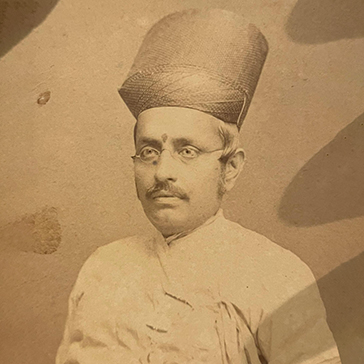
One of colonial Bombay’s foremost reformers and philanthropists, Sir Mangaldas Nathubhai was among the earliest Indians knighted by the British crown. The accolade was owed to his valuable contributions to education, healthcare and civic reform, tying his and his family’s legacy to the act of giving.
Born into Bombay’s Kapole Bania community of mercantile networks, Mangaldas inherited his father’s expansive estate at just 11. By the time he took full charge at 18, a strong sense of public responsibility had already taken root.
Along with honing the hats of being a burgeoning merchant and a reformer planting himself within a growing circle of intelligentsia, Sir Mangaldas Nathubhai was also a discerning collector. Offered to the public for the first time, Prinseps is proud to present The Estate of Sir Mangaldas Nathubhai, a series of six auctions that tie together historical value and impeccable quality passed down and preserved among four generation's of the Mangaldas family.
Chapter One: The Art of Porcelain
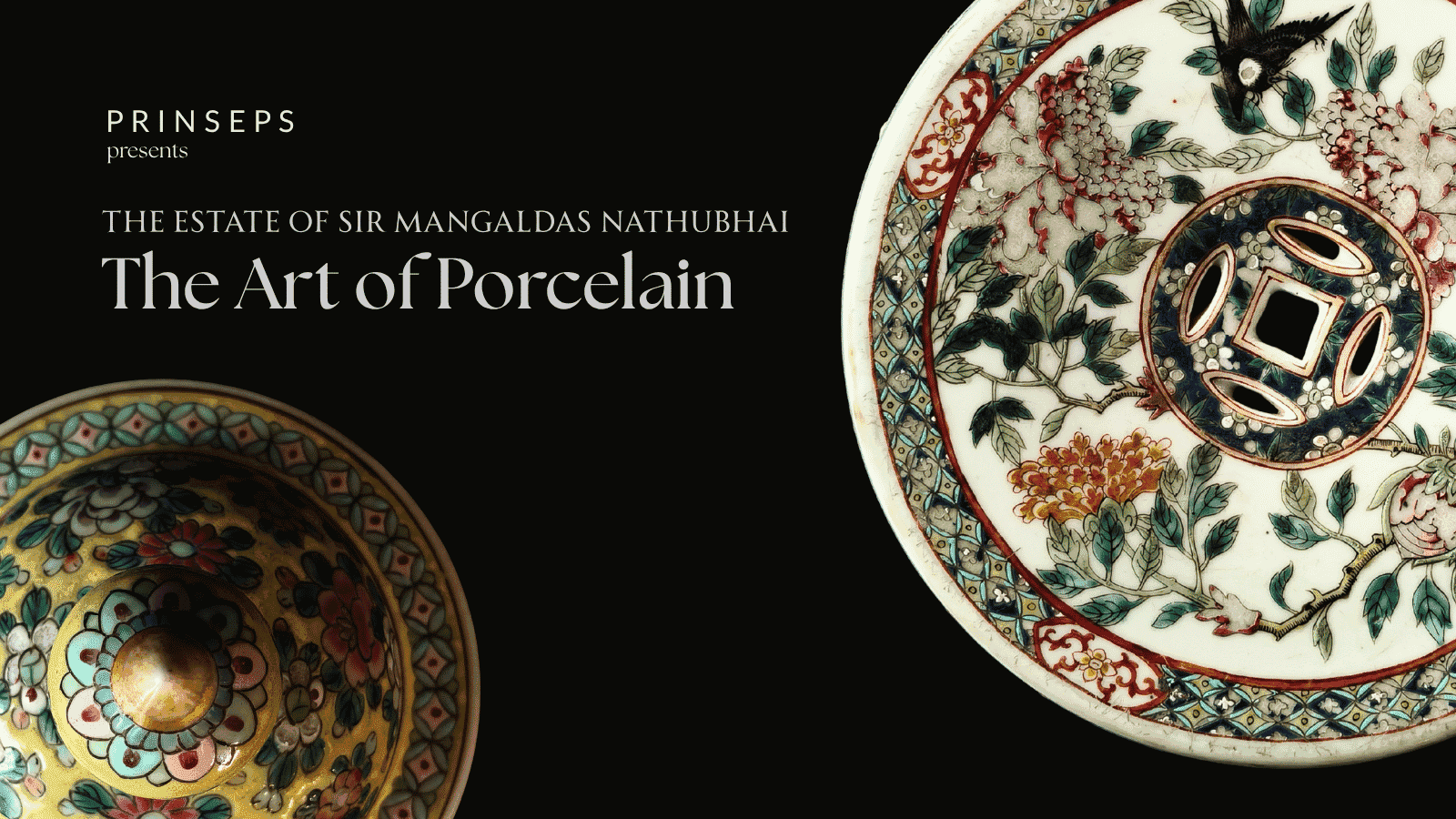
A collection of precious porcelain pieces once gleamed in Sir Mangaldas Nathubhai’s family homes in Malabar Hill and Girgaum. Travelling across oceans to 19th century Bombay, Famille Rose ginger jars from the Late Qing/ Early Republic periods in China and Satsuma floor vases from Meiji Period/ Taisho Period depicting courtly life in Japan welcomed guests to opulent balls and wedding celebrations. Make sure to also check out the intricately crafted Famille Rose garden seats that glowed under sunkissed evenings, carrying memories of children at play.
Explore the full auction catalogue: https://auction.prinseps.com/past-auctions/prinse10008
Chapter Two: Timekeepers & Treasures
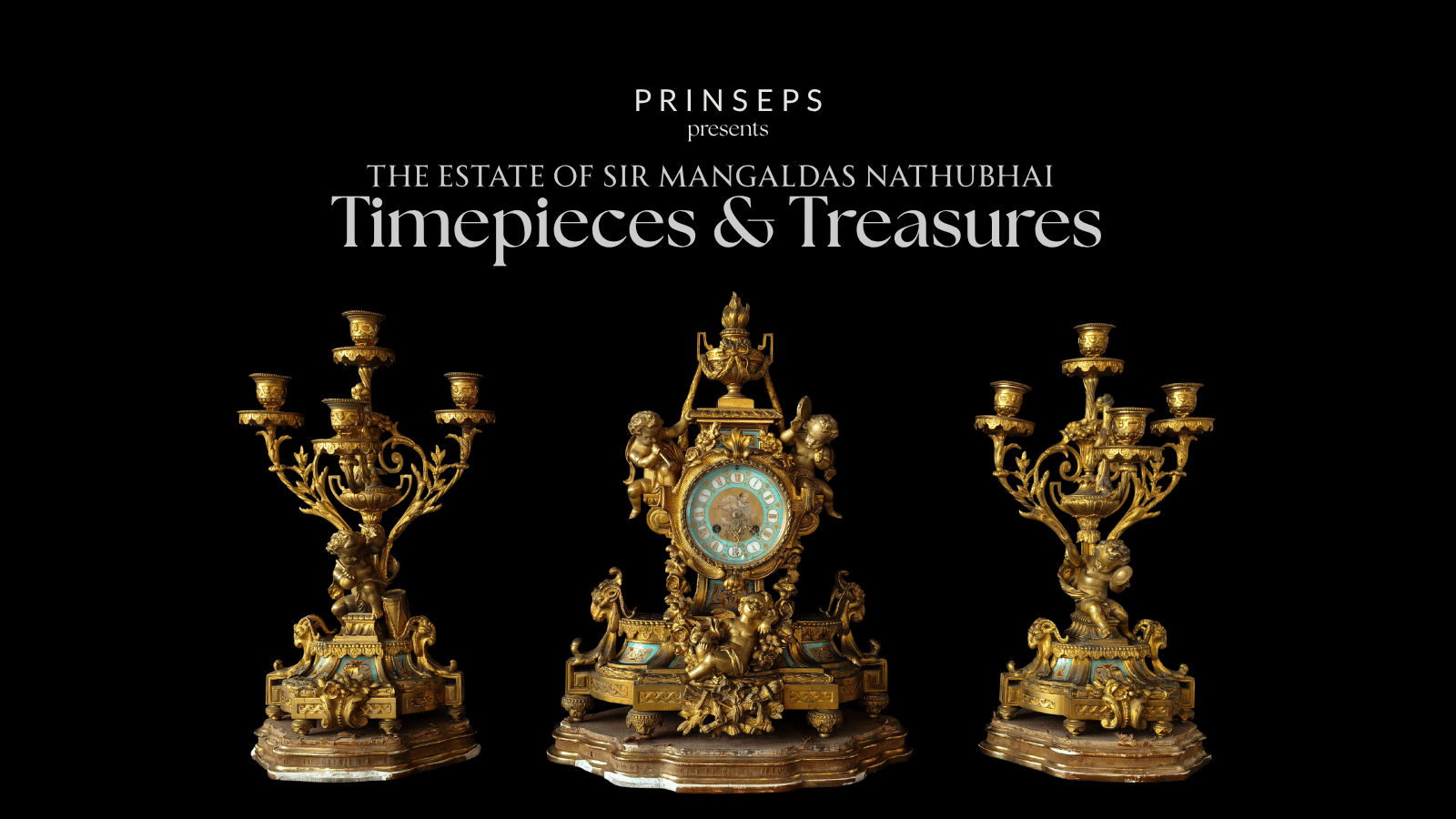
The second chapter of this auction series unfurls a collection of timepieces and sculptural treasures that transport viewers back to Europe in the 1800s. These pieces not only dictated the rhythm of the family’s daily life but also endure as a mark of the family’s cosmopolitan eye.
A standout piece is a French ormolu and porcelain mantel clock with its companion candelabra, forming a three-piece garniture in gilt bronze and turquoise porcelain. The dial, adorned with painted cherubs, alongside mythological figures and a flaming-urn finial, evokes the excellence of Louis XVI revival design. Not to miss, a stunning italian alabaster sculptor of a Praying Boy, crafted after the famous work of Luigi Pampaloni.
Explore the full auction catalogue: https://auction.prinseps.com/past-auctions/prinse10009
Chapter Three: The Mangaldas Library
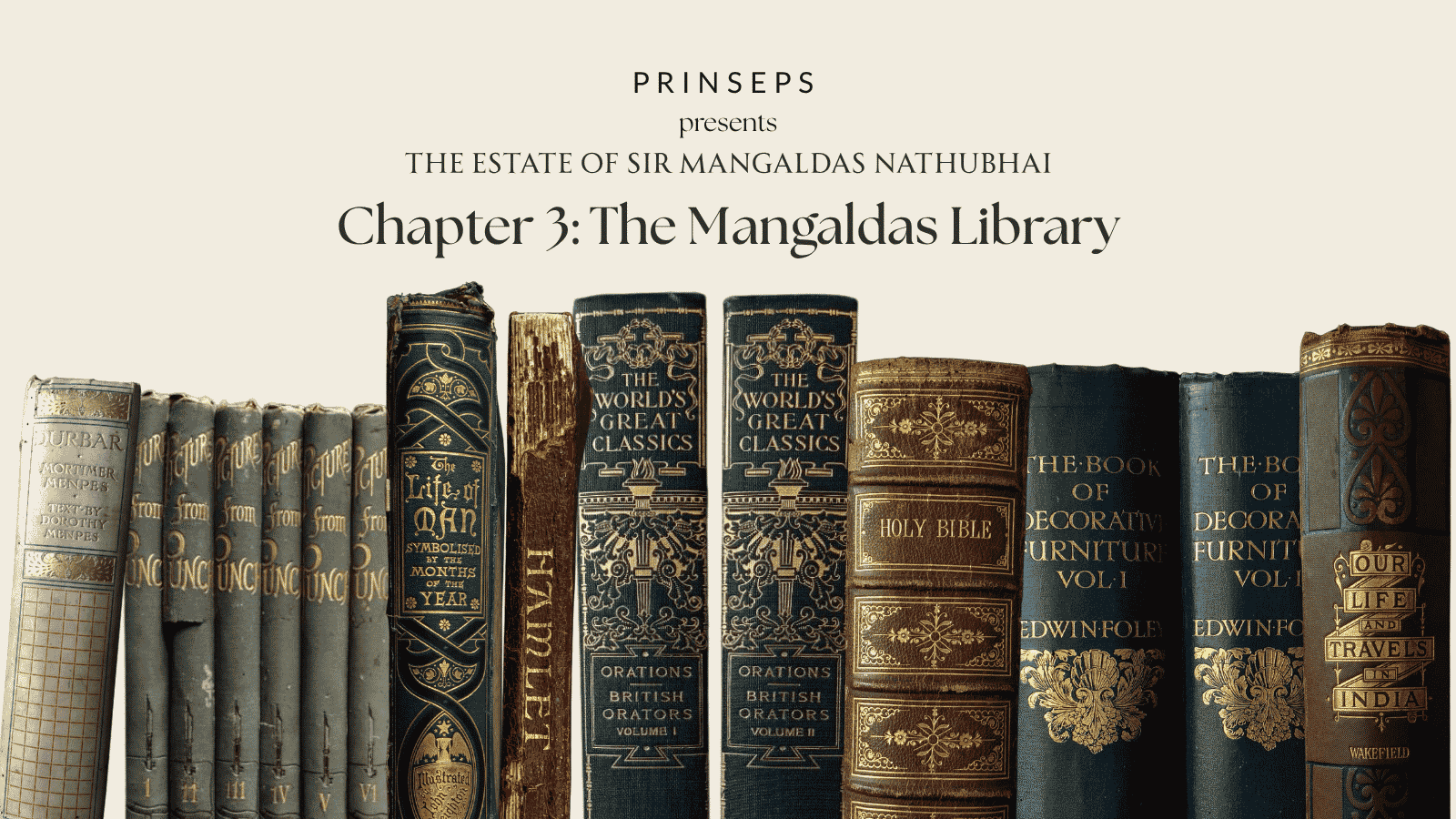
The shelves in the Mangaldas family home were lined with books from near and far, carrying Shakespear’s classics, biographies, travel notes, books on art and design and accounts of a rapidly transforming India and more.
Although Gujarati remained the language of the home, the family’s command of English was equally distinguished. Sir Mangaldas’s grandson Kishoredas Nathubhai’s wife Kusumben, and his sister Kamlavati were among the earliest women graduates of the University of Bombay. The family sustained this intellectual inheritance, ensuring the Mangaldas Library endured as a living repository of learning, curiosity, and cultivated taste.
The earliest volumes trace back to the early nineteenth century, Oriental Memoirs (1813) by James Forbes, India Illustrated, and Glimpses of India are lavishly illustrated accounts of a world being recorded, sketched, and photographed for a global audience.
Readers would also not want to miss out on a gilt-edged volume from The Stage Shakespeare series, featuring Sir Henry Irving portrayed as Hamlet. This compact edition speaks to the family’s engagement with English literary and theatrical traditions.
Explore the full auction catalogue: https://auction.prinseps.com/past-auctions/prinse10010
Chapter Four: Colonial to Art Deco Furniture
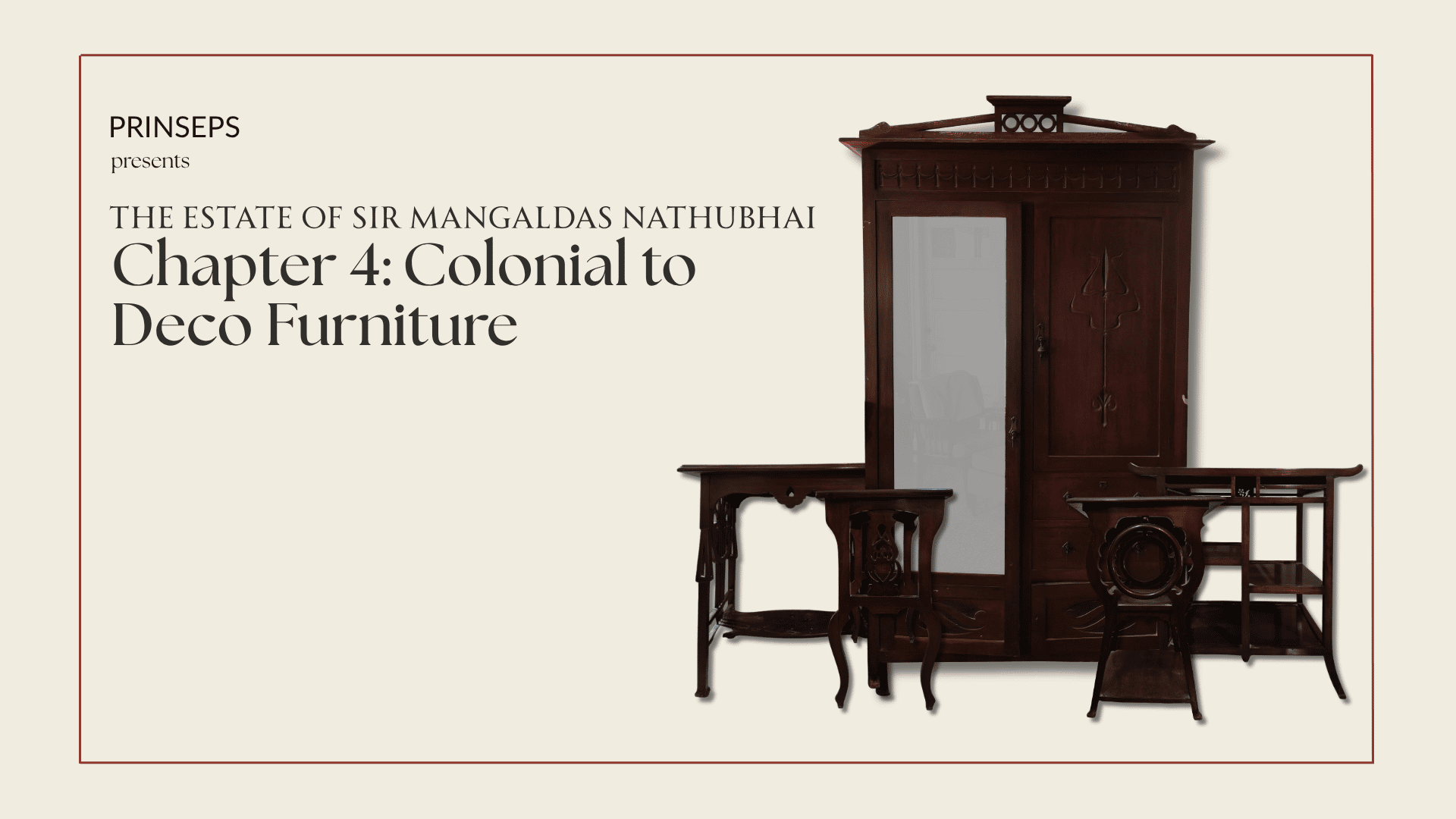
The fourth chapter of the series turns to the interiors of the Mangaldas family’s opulent homes, ringing in furniture and decoratives from the 1930s, when the city was at the peak of its art deco transformation. The cabinets, wardrobes, and vanities that come to auction reflect the elegance and precision that defined this era of home decor, merging international design ideas with fine Indian craftsmanship.
The pieces are rooted in recollections of familial memories, as noted by Mita Sujan, the great-great granddaughter of Sir Mangaldas Nathubhai.
“The small safe has been used for generations — to store daily household money and jewelry. The dressing tables too — my daughters wouldn’t let me sell them because they remember Ma sitting there to put on her bindi and jewelry before a party. The cupboards once held my grandmother’s white saris and later were used by my children and grandson.”
A notable highlight is the High-Style Compactum Cabinet with a stepped “skyscraper” silhouette. Its tiered cornice and softened corners mirror the ambitions of early modern architecture, suggesting a furniture-scale reflection of the emerging urban skyline. Circular veneer motifs and contrasting banding further articulate a Machine Age sensibility, celebrating precision, rhythm, and order.
Explore the full auction catalogue: https://auction.prinseps.com/past-auctions/prinse10012
Chapter Five: The Mangaldas Silver Service
_(twit.png)
Silverware held an important place in the households of colonial Bombay’s elite. Beyond its function as tableware, it signified entry into a world defined by inheritance, giving expression to the idea of being “born with a silver spoon.”
Prinseps presents a silver tableware set made of fine silver, weighing a total of 23.8 kgs from the estate of Sir Mangaldas Nathubhai.
Several pieces in the service are marked with the monogram “MN,” identifying Sir Mangaldas Nathubhai, while others bear “KPM,” denoting his grandson, Kishoredas Purushottamdas Mangaldas. Additional inscriptions such as Kamlavati Purushottamdas Mangaldas, Kishoredas’s sister, and Kusumben, his wife further personalise the collection.
These markings document the transfer of ownership across generations, tracing the service’s passage through the family’s residences, from Girgaum to Malabar Hill, and later to the Commonwealth building at Nariman Point following the sale of the Malabar Hill property in 1953.
The lots are priced at the closing price of silver on the day of purchase * actual weight + 15 % for each lot.
Contact us at gallery@prinseps.com to make your offers and learn more.
The Decorative Sale: Objet's d'Art from the Mangaldas Estate
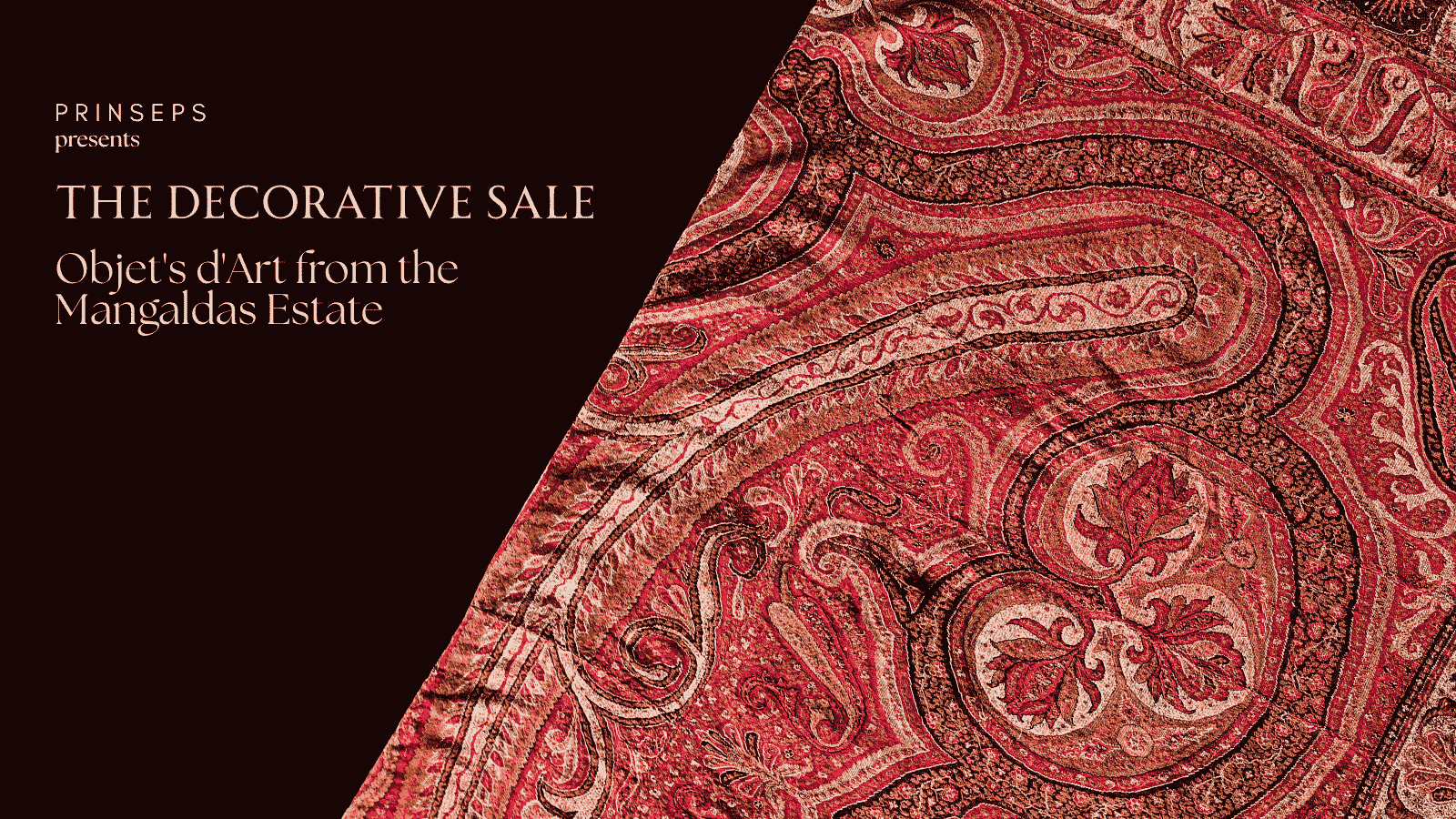
The sixth auction from the estate of Sir Mangaldas Nathubhai collates cherished items that once decorated the daily life within the Mangaldas family homes. The sale celebrated craftmanship just as much as memories that each item holds, from tea services and Japanese tableware to an extensive collection of cut glass from the Mangaldas estate. While the tablewares whisper stories shared during evening teas among the family and their guests, the Kashmiri Jamawar narrates a tale of its own.
An impeccable example of Kashmir’s celebrated weaving tradition, which gained widespread acclaim across South Asia, Central Asia, and Europe from the late eighteenth century onward, Jamawar shawls are defined by their intricate, all-over designs. These richly patterned textiles were produced through highly labor-intensive loom weaving, often involving multiple artisans and long periods of meticulous work.
The richness of colour and intricacy of the woven ornament underscore the prestige of Jamawar textiles, long associated with royal and elite patronage and valued as luxury objects. This shawl demonstrates the technical and artistic refinement that positioned Kashmiri Jamawar weaving among the most important textile traditions of the Indian subcontinent.
Explore the full auction catalogue: https://auction.prinseps.com/past-auctions/prinse10015

