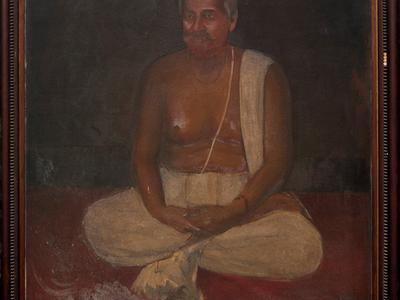
Ramkinker Baij's Castings 1978 -
Ramkinker Baij is considered the father of modern Indian sculpture. This is an attempt to piece together a puzzle and the issue of posthumous casts.
Read More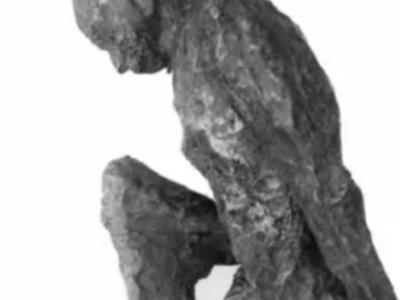
Ramkinker Baij is considered the father of modern Indian sculpture. This is an attempt to piece together a puzzle and the issue of posthumous casts.
Read More
Jamini Roy’s earlier residence at 1/2B Ananda Kumar Chatterjee Lane (currently abandoned) in North Kolkata, where he lived for sixteen years. This was the home visited by Rabindranath Tagore and patrons like Maie Casey (wife of the then Bengal governor) and where he found success. The family was residents here till December 1949 when they moved to their current residence at Ballygunge Place East.
Read More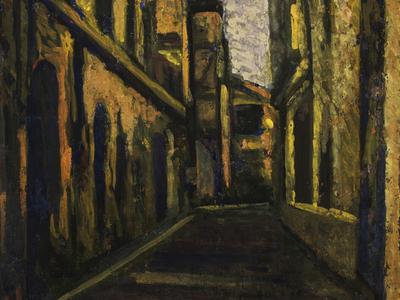
Ramkinker Baij “ may be considered the most important original sculptor working in India in the period of transition from traditional to modern art.” [1]. He is considered by many to be the 'Father of Modern Indian Sculpture '.
Read More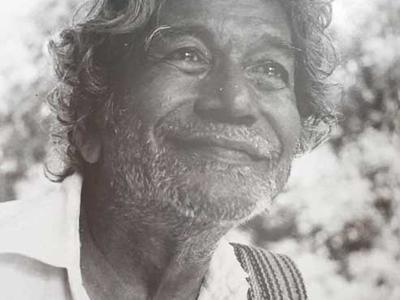
Born in 1898 in Mymensingh, Bengal was known as a portrait painter. He studied at the Jubilee Academy in Calcutta in 1914 and then at the government art school in 1916, and began his career an artist in Bengal. Bose's Bengal Tiger, a sketch of the educationist Ashutosh Mukherjee, earned him a scholarship to the Royal Academy in London in 1924.
Read More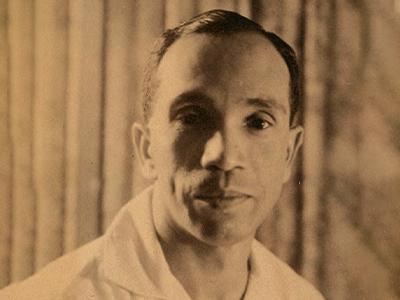
A section of Bikash Bhattacharjee's works is considered surrealist. An explanation is needed.
Read More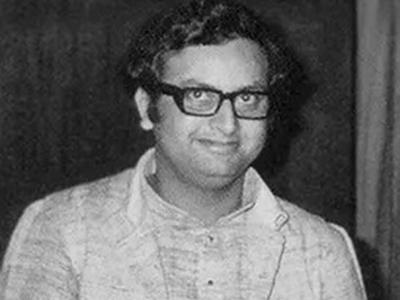
Among the lesser-known archival treasures preserved in the estate of Rathindranath Tagore are several rare speeches of Kabiguru Rabindranath Tagore, some of which are believed to have been written and corrected by Tagore himself. These speeches are important not only as historical documents, but it also carries the voice of an ageing poet-philosopher reflecting upon art, education, spiritual crisis of the modern civilization, and the changing social atmosphere of Bengal and Santiniketan during the final years of his life.
Read More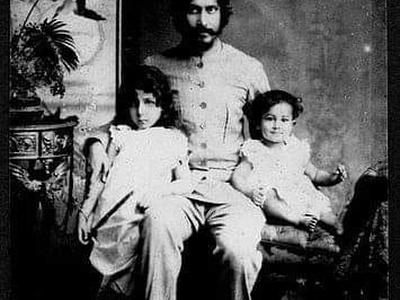
The audiences who wept through Satyajit Ray's Pather Panchali, with its kash flowers, rain-soaked landscapes and the first stirring of Apu’s world; who watched Meena Kumari as Chhoti Bahu in Sahib Bibi Aur Ghulam, where Bhanu Athaiya’s painterly sense allowed saris, borders and translucent layers to carry emotion through the greys of the black-and-white screen; who recognised themselves in Amol Palekar’s gentle, unheroic presence in Chhoti Si Baat and Gol Maal, were responding to three artists whose work had entered public memory through film.
Read More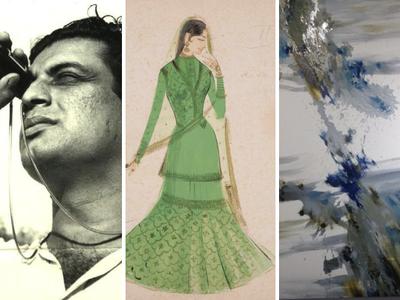
Among the handwritten treasures once preserved in the estate of Rathindranath Tagore, is a fascinating, dramatic manuscript dated simply “22nd Poush, 1322” (7th January 1916). Written on both sides of the pages, the manuscript appears to have been intended for stage performance. One of the plays of this manuscript, Phalguni has a strong resemblance to Rabindranath Tagore's celebrated dance-drama of the same name, suggesting that these manuscripts may represent adaptations of the original text. Its dramatic structure, language, and humor speak vividly of the cultural milieu from which it emerged.
Read More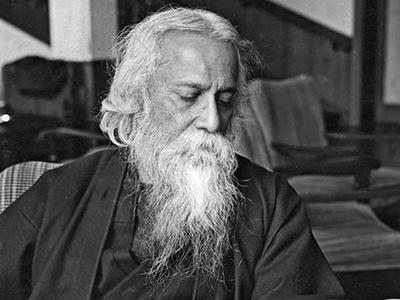
This research note concerns the two gilded bronze sculptures discovered at the Mangaldas Estate, whose provenance suggests they were likely acquired during the estate’s principal period of art collecting in the mid to late nineteenth century.
Read More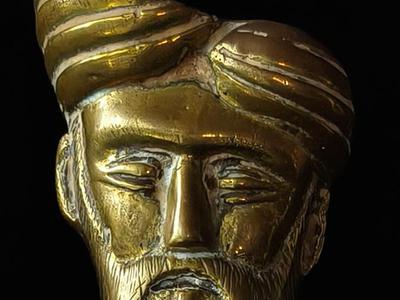
This is a research note on early post-independence modernism (1951-1952) and steps towards abstraction, with a specific focus on Bhanu Athaiya.
Read More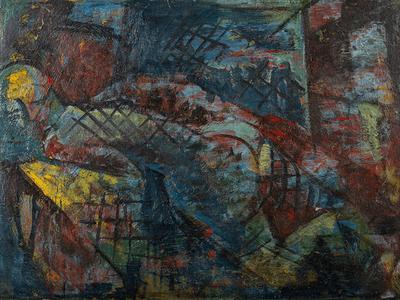
A sweeping battlefield unfolds across the canvas, the vast sky painted a dull orange. At the centre stands General Sir Charles Napier on an elevated ground, surrounded by the Queen’s 22nd Regiment. The terrain breaks into dry riverbeds and trenches hurl with haunting sounds of intense combat. A fraction of the troops continue to press forward through the uneven landscape while another navigates a distant plain.
Read More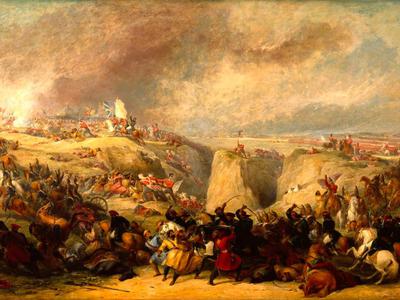
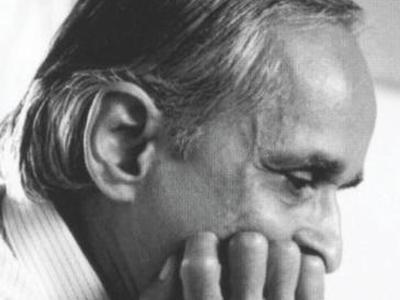
A founding member of the Progressive Artists’ Group and one of the first Indian modernists to incorporate abstract expressionism into their artworks post-independence, Hari Ambadas Gade is known for his abstract landscape compositions and vibrant colour palette. Working against the dominance of western academic realism under the British Raj, he developed a vivid, structurally driven visual language that remains singular within modern Indian art.
Read More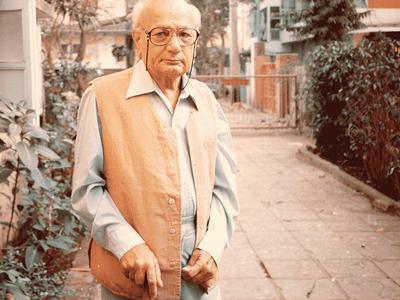
In Kolhapur, often called Kalapur, a city of the arts, artistic and cultural activity flourished in the early twentieth century, with artists such as M. V. Dhurandhar, Abalal Rahiman, and Baburao Painter shaping its cultural life, as modern visual technologies such as painting, photography, and cinema took root in the state.
Read More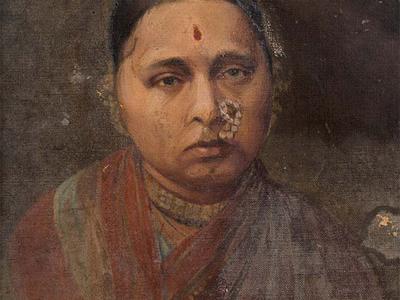
Leatherwork in Santiniketan originated from a broader movement to revive the traditional crafts of rural Bengal and reintroduce skilled occupations to village life. In the early decades of the twentieth century, Rabindranath Tagore turned his attention to the villages surrounding Santiniketan and began to organise a programme of rural reconstruction that placed work, skill, and livelihood at the centre of education.
Read More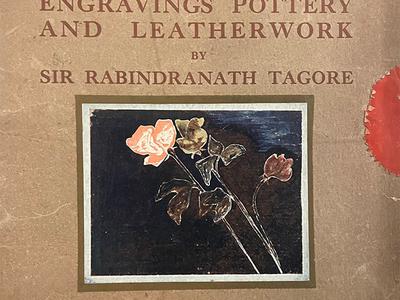
Narayan Shripad Rajhans was born in 1888 in Satara district, into a Chitpavan Brahmin family deeply steeped in music and theatre. In the household and within its immediate circle, music was part of devotional and everyday practice—his mother sang, and his maternal grandfather, Appa Shastri, a Sanskrit scholar, recited the Puranas at Baba Maharaj’s gatherings. It was within this environment that his earliest leanings toward the stage took root.
Read More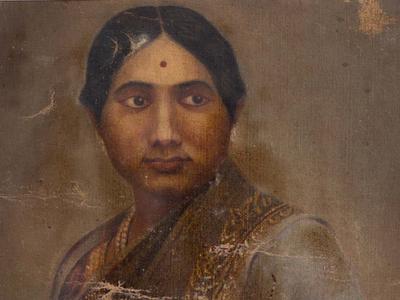
Radha and Krishna have appeared in Indian painting for centuries, their story retold across manuscript illustration, temple painting, and courtly miniature traditions. In the early twentieth century, the Bengal School sought to reshape the language of modern Indian painting. Instead of following the heavily modelled realism taught in colonial art schools, its artists turned to earlier Indian traditions—Ajanta murals, sculpture, and miniature painting—for inspiration.
Read More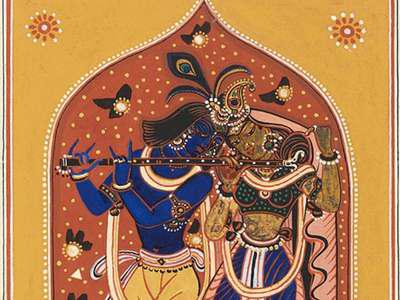
When the Orientalist William Jones wrote his hymn to Saraswati in the late eighteenth century, he described the goddess as the “patroness of fine arts, especially of Musick and Rhetorick. (archaic)” Reflecting on the poetic tradition surrounding her, Jones remarked that it evokes the Ragmala—the “Necklace of Musical Modes,” which he called “the most beautiful union of Painting with poetical Mythology and the genuine theory of Musick.” [1] His observation captures something essential about Saraswati’s place in Indian culture: she belongs at once to music, language, and the visual arts.
Read More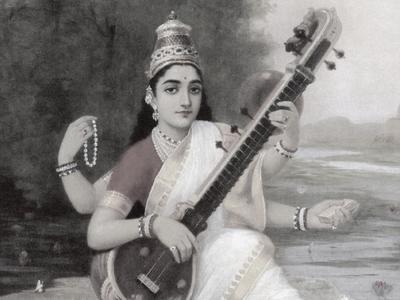
Marie-Louise Chassany (Chassagny) was a French painter in the Paris art circles of the early 1930s and, for many around her, a muse. She shared a studio with Amrita Sher-Gil in Montparnasse and became a compelling presence within that artistic milieu. Tall and slender, “like a Giacometti,” [1] as one contemporary recalled, she carried an enigmatic air that drew the attention of the painters around her. Yet Chassany was not merely an inspiration for others. She was herself an artist whose work Sher-Gil admired, once likening it to the strange sensitivity of early Pablo Picasso alongside the intensity of Chaïm Soutine.
Read More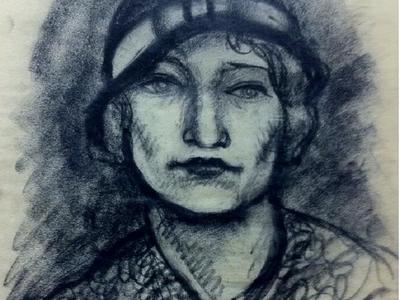

Install this application on your home screen for quick and easy access
 then 'Add to Home Screen'