Results for "progressive artists group"


Santiniketan in Correspondence

At Santiniketan, correspondence played an essential role in artistic life. Letters, postcards, and small drawings circulated steadily between students, teachers, administrators, and friends, creating a working network through which ideas, images, and observations moved across distances. These exchanges were not incidental. They were closely aligned with Rabindranath Tagore’s educational vision, in which learning extended beyond the classroom into daily life, travel, and conversation, and in which artistic practice was embedded within lived experience rather than confined to formal instruction.

Read More
Santiniketan in Correspondence

Jamini Roy’s Modernism

Why Jamini Roy's Visual Language was Truly Avant-Garde This discussion examines Jamini’s invented language (of modernism) and what makes him a creative genius. This examines his crucial contribution to Modernism in India / the beginnings of true modernism in India. 

Read More
Jamini Roy’s Modernism

Calcutta and the Lost Story of Modern Indian Art

Few artists in India's modern history have lived a life as inspiring as Satish Gujral's. Losing his hearing at a very tender age, he transformed silence into creative expression. A student of both the Mayo School of Art in Lahore and the Sir J.J School of Art in Bombay, Satish Gujral's creative journey spanned painting, sculpture, mural and even architecture.

Read More
Calcutta and the Lost Story of Modern Indian Art

Bhanu Athaiya's Feminist Vision

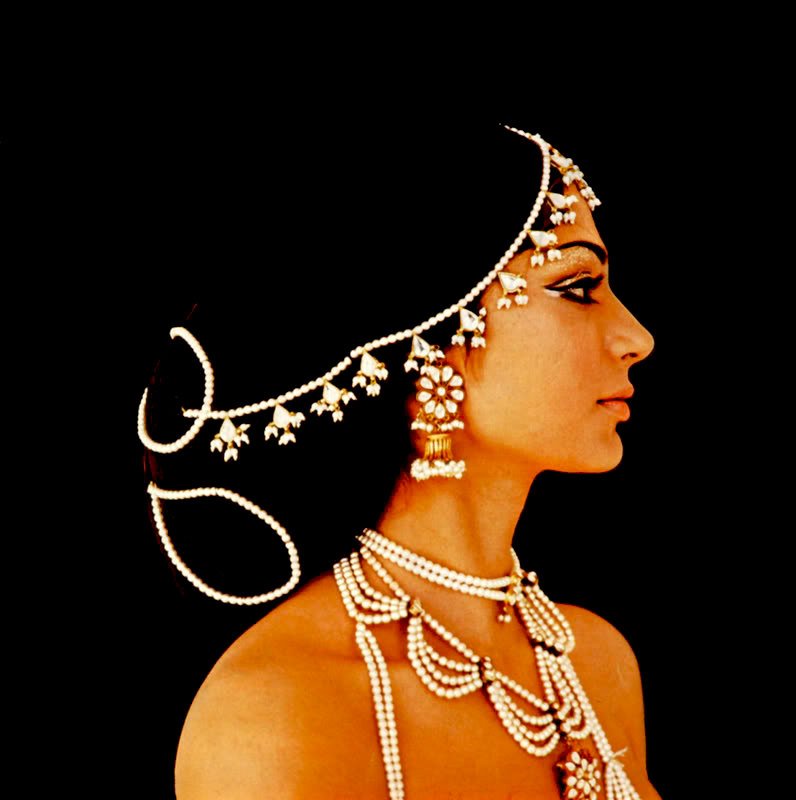
Bhanu Athaiya often described herself simply as “a painter who came to cinema.” She carried the discipline of her art training into every film she worked on, treating costume as an extension of character. Actresses who worked with her — from Waheeda Rehman to Zeenat Aman — remembered how she would sit with them, discuss each scene, and ensure that they felt completely at ease. Rekha called her “a mentor, creative guide, and friend,”  [1] while Meena Kumari’s first words to her on the set of Sahib Bibi aur Ghulam were, “Bhanu, take care of me.”  [2] That instinct — to listen, to understand, and to protect — would come to define her feminist practice.

Read More
Bhanu Athaiya's Feminist Vision

Bhanu Athaiya - pre-1953 Catalogue Raisonne

A rare catalogue raisonné of Bhanu Athaiya’s fine art and formative years at the J.J. School of Art—spotlighting the only woman in the Progressive Artists’ Group, who redefined her artistic journey through costume design and became India’s first Oscar winner.

Read More
Bhanu Athaiya - pre-1953 Catalogue Raisonne

Art and Dissent in the 1940s

The 1940s were a decade of political urgency and artistic transformation in India—especially in Bombay, where anti-colonial movements, Marxist cultural activism, and encounters with European émigrés sparked a radical new visual language. As the Quit India Movement mobilized students and artists alike, figures like P.C. Joshi and Mulk Raj Anand rallied for an art that was politically engaged and socially conscious. The Progressive Writers’ Association, the Calcutta Group, and the Indian People’s Theatre Association (IPTA) all shaped a cultural climate where art and resistance were deeply intertwined.

Read More
Art and Dissent in the 1940s

Lalitha Lajmi and the Nocturnal Art of Making

If one were to visit Lalitha Lajmi’s home in her later years, one would find a space that quietly mirrored the artist herself. The walls were defining spaces in Lajmi's living room that spoke volumes about her creative personality. On the round table, a half-painted watercolour waited patiently, flanked by brushes and metal cups, its silent companions in the long hours of her nocturnal practice.

Read More
Lalitha Lajmi and the Nocturnal Art of Making

My Sculpture Garden Grows

To be precise my garden is currently two flower pots but as any other Oval Maidan (Mumbai) or Central Park (NY) facing resident would say – the entire oval (park) is my garden!

Read More
My Sculpture Garden Grows

Amal Home: Bengal’s Forgotten Cosmopolitan

There was a time when Amal Chandra Home Ray, known to peers as simply Amal Home, was a name familiar to Bengal’s cultural, literary, and political elite. Described by writer Nirad C. Chaudhuri as a “showman, an impresario,”[1]  Amal was an elegant, erudite, complex figure whose legacy today lives on in scattered memories, faded photographs, and the quiet efforts of his daughter, Amalina Dutta, to restore him to public memory.

Read More
Amal Home: Bengal’s Forgotten Cosmopolitan

F.N. Souza

A Timeline of His Life, Art, and Legacy // This timeline traces the life and work of Francis Newton Souza (1924–2002), mapping the personal losses, political upheavals, and artistic milestones that shaped one of modern India’s most radical and uncompromising painters. Born in colonial Goa and raised between Bombay and Saligao, Souza’s early years were marked by rebellion—against convention, religious orthodoxy, and artistic mediocrity.

Read More
F.N. Souza

Any questions?