Results for "rabindranath tagore"


Leathercraft at Santiniketan

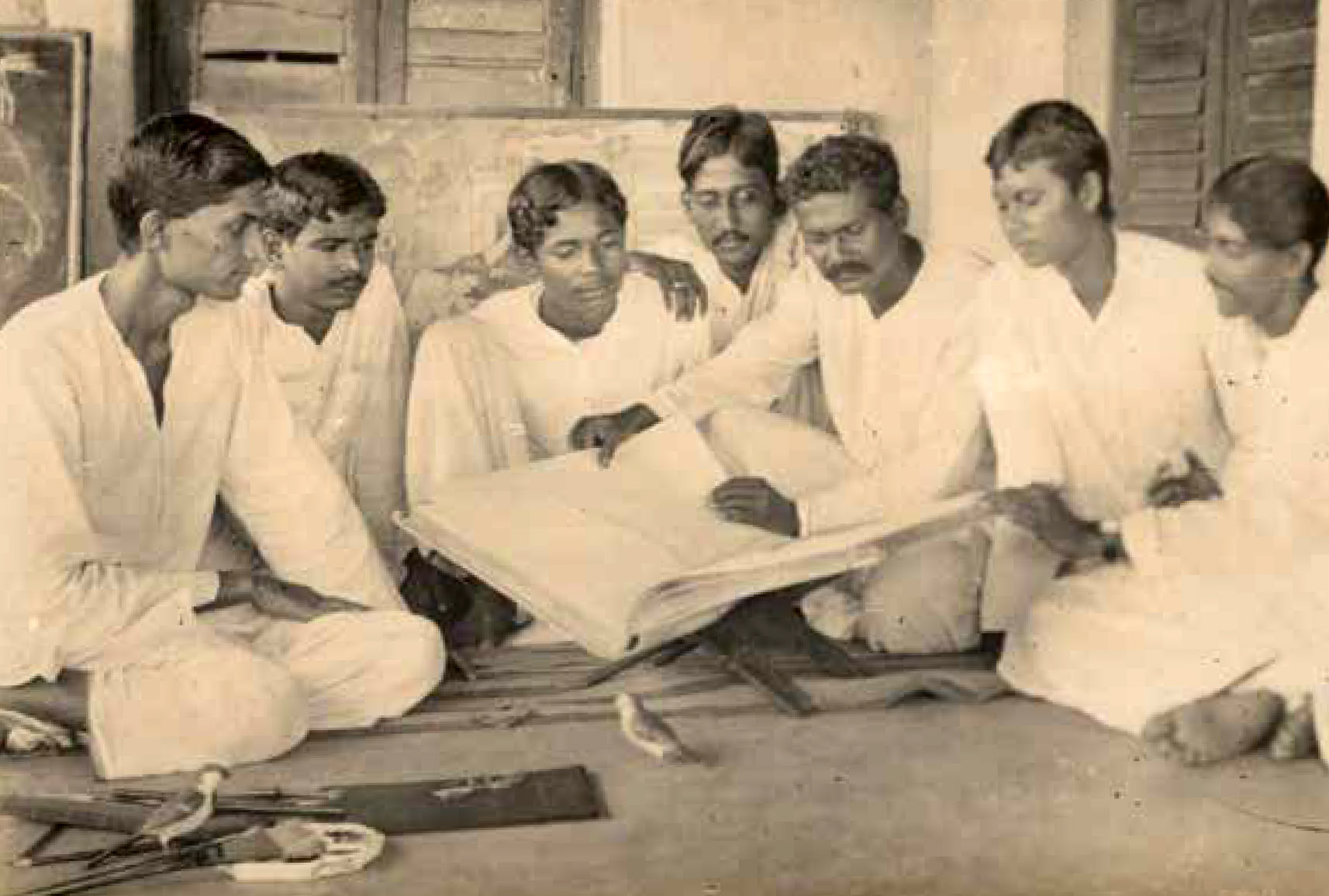
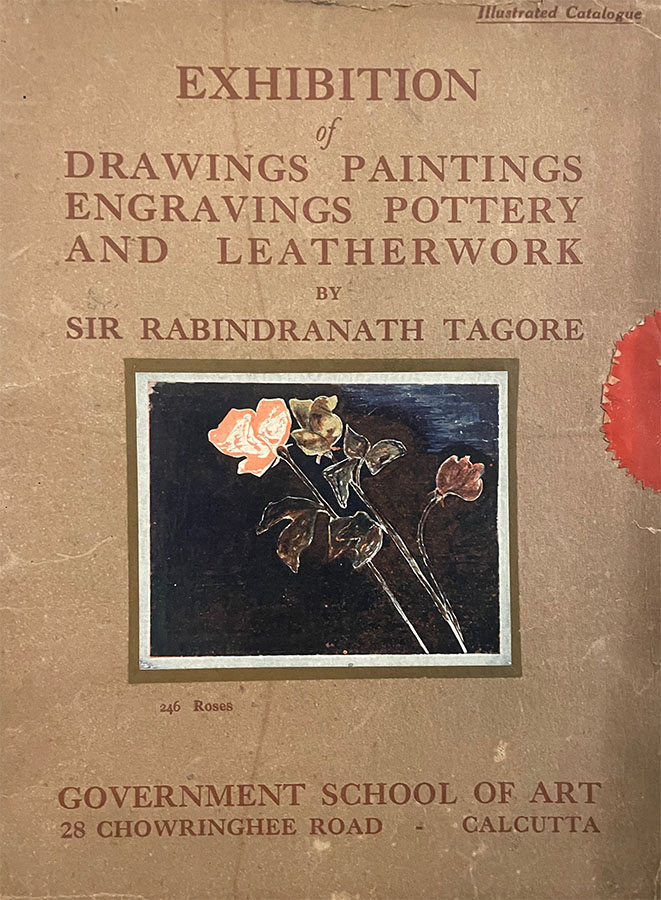
Leatherwork in Santiniketan originated from a broader movement to revive the traditional crafts of rural Bengal and reintroduce skilled occupations to village life. In the early decades of the twentieth century, Rabindranath Tagore turned his attention to the villages surrounding Santiniketan and began to organise a programme of rural reconstruction that placed work, skill, and livelihood at the centre of education. In the early 1920s, at Sriniketan, he established a rural reconstruction centre where agriculture and village industries were developed as regular institutional activity. Craft entered this programme as part of daily labour. Weaving, carpentry, pottery, dyeing, and leatherwork were taught alongside cultivation and rural service, and workshops became working spaces where students and village artisans learned trades. Speaking about the purpose of this effort, Rabindranath expressed the principle that guided the work: "The drama of national self-expression could not be real if rural India were banished."Within this programme, leatherwork was developed through the initiative of Rathindranath Tagore. In 1928, during his stay in England, he began studying leatherwork and developed a lasting interest in the craft. After returning to Santiniketan later that year, he introduced leatherwork to students and continued to practise it within the training system at Sriniketan. In 1930, after formal vocational instruction in Europe with Pratima Devi, he established a regular leather workshop at Silpa Sadan. Ink and Embossing on Leather by RathindranathTagore From 1932, the workshop produced a growing range of leather goods—handbags, book covers, portfolios, trays, and domestic objects—made from vegetable-tanned goat and sheepskin and decorated through embossing, stencil work, and batik techniques. These objects soon appeared in exhibitions and institutional displays, carrying the name Santiniketan and establishing a recognizable tradition of leather craftsmanship rooted in the revival of rural craft. 

Read More
Leathercraft at Santiniketan

Nandalal Bose’s Radha Krishna: An Epitome of the Bengal School

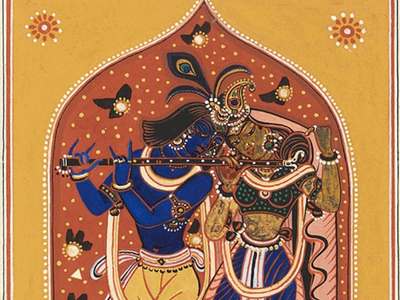
Radha and Krishna have appeared in Indian painting for centuries, their story retold across manuscript illustration, temple painting, and courtly miniature traditions. In the early twentieth century, the Bengal School sought to reshape the language of modern Indian painting. Instead of following the heavily modelled realism taught in colonial art schools, its artists turned to earlier Indian traditions—Ajanta murals, sculpture, and miniature painting—for inspiration. 

Read More
Nandalal Bose’s Radha Krishna: An Epitome of the Bengal School

Santiniketan in Correspondence

At Santiniketan, correspondence played an essential role in artistic life. Letters, postcards, and small drawings circulated steadily between students, teachers, administrators, and friends, creating a working network through which ideas, images, and observations moved across distances. These exchanges were not incidental. They were closely aligned with Rabindranath Tagore’s educational vision, in which learning extended beyond the classroom into daily life, travel, and conversation, and in which artistic practice was embedded within lived experience rather than confined to formal instruction.

Read More
Santiniketan in Correspondence

Amal Home: Bengal’s Forgotten Cosmopolitan

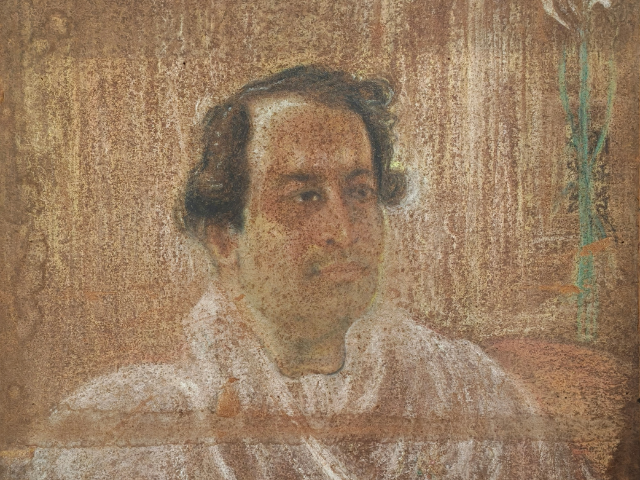
There was a time when Amal Chandra Home Ray, known to peers as simply Amal Home, was a name familiar to Bengal’s cultural, literary, and political elite. Described by writer Nirad C. Chaudhuri as a “showman, an impresario,”[1]  Amal was an elegant, erudite, complex figure whose legacy today lives on in scattered memories, faded photographs, and the quiet efforts of his daughter, Amalina Dutta, to restore him to public memory.

Read More
Amal Home: Bengal’s Forgotten Cosmopolitan

Saraswati in Two Artistic Worlds: Sunayani Devi and Baburao Painter

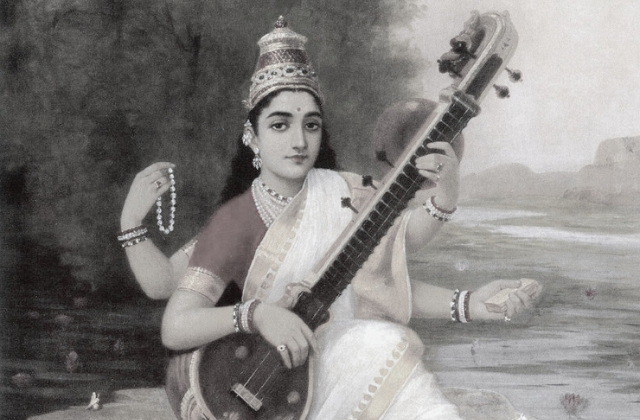
When the Orientalist William Jones wrote his hymn to Saraswati in the late eighteenth century, he described the goddess as the “patroness of fine arts, especially of Musick and Rhetorick. (archaic)” Reflecting on the poetic tradition surrounding her, Jones remarked that it evokes the Ragmala—the “Necklace of Musical Modes,” which he called “the most beautiful union of Painting with poetical Mythology and the genuine theory of Musick.” [1] His observation captures something essential about Saraswati’s place in Indian culture: she belongs at once to music, language, and the visual arts.

Read More
Saraswati in Two Artistic Worlds: Sunayani Devi and Baburao Painter

Cheena Bhavan, Visva Bharati - Exchange of Indian & Chinese Culture

Tucked away from the bustle of colonial Kolkata, Bolpur’s red-earth landscape became home to Santiniketan in 1863, when Maharshi Devendranath Tagore purchased the land and established a spiritual retreat he named the “Abode of Peace.”

Read More
Cheena Bhavan, Visva Bharati - Exchange of Indian & Chinese Culture

Xu Beihong - The Chinese Modernist’s Artistic Pilgrimage to India

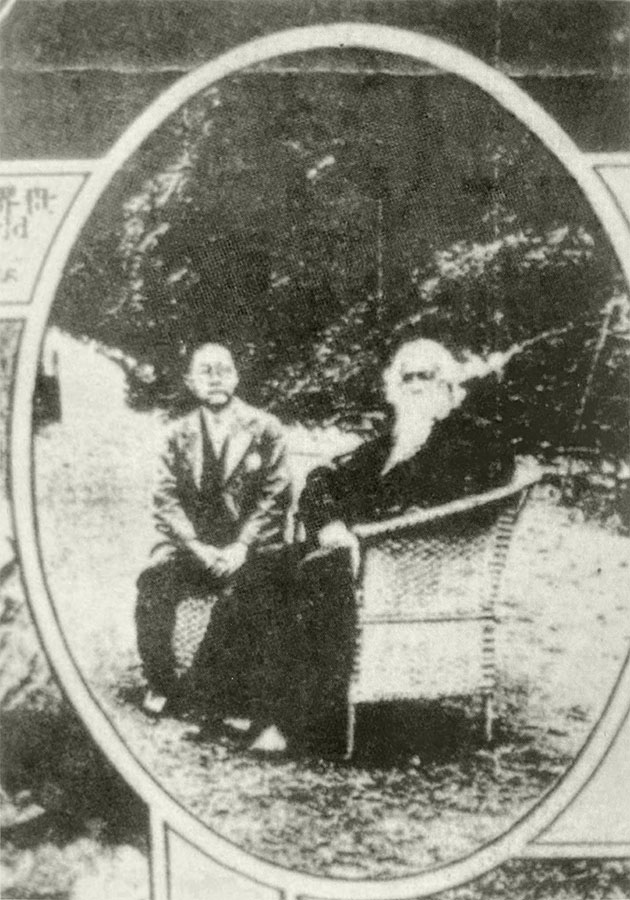
Hailed as the father of modern Chinese painting, Xu Beihong’s vast oeuvre reflects a rich confluence of cultural influences absorbed during his travels. Among these sojourns, Xu’s spirit of cultural fusion found new ground in 1939, when he was appointed the first Chinese visiting professor at Rabindranath Tagore’s Visva-Bharati University in Santiniketan, West Bengal. 

Read More
Xu Beihong - The Chinese Modernist’s Artistic Pilgrimage to India

Ignoring the Elephant in the Room

Jamini Roy and Gao Jianfu's Overlooked Collaboration This research note is about Gao Jianfu, the founding member of the Lingnan School of art, his travel to India, and a hitherto undocumented collaboration / influence with Jamini Roy.

Read More
Ignoring the Elephant in the Room

My Sculpture Garden Grows

To be precise my garden is currently two flower pots but as any other Oval Maidan (Mumbai) or Central Park (NY) facing resident would say – the entire oval (park) is my garden!

Read More
My Sculpture Garden Grows

Chronological Glimpse into the Life and Art of Jamini Roy

From the humble lanes of Beliatore to the grand pages of Indian art history, Jamini Roy's life was a journey of artistic awakening. His artistic journey, deeply rooted in Bengal's folk traditions, reflects a bold departure from the Western academic styles. The following timeline translated from the Bengali text Jamini Roy: Jibonpanji, written by Debasish Mukhopadhyay, presents a chronological account of his life, education, and major achievements.  

Read More
Chronological Glimpse into the Life and Art of Jamini Roy

Any questions?