Baburao Painter


Becoming Bal Gandharva: Voice, Stage, and the Making of an Icon

Narayan Shripad Rajhans was born in 1888 in Satara district, into a Chitpavan Brahmin family deeply steeped in music and theatre. In the household and within its immediate circle, music was part of devotional and everyday practice—his mother sang, and his maternal grandfather, Appa Shastri, a Sanskrit scholar, recited the Puranas at Baba Maharaj’s gatherings. It was within this environment that his earliest leanings toward the stage took root.

Read More
Becoming Bal Gandharva: Voice, Stage, and the Making of an Icon

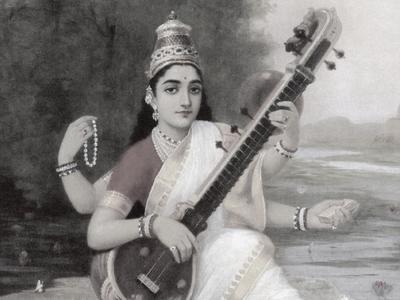
Saraswati in Two Artistic Worlds: Sunayani Devi and Baburao Painter

When the Orientalist William Jones wrote his hymn to Saraswati in the late eighteenth century, he described the goddess as the “patroness of fine arts, especially of Musick and Rhetorick. (archaic)” Reflecting on the poetic tradition surrounding her, Jones remarked that it evokes the Ragmala—the “Necklace of Musical Modes,” which he called “the most beautiful union of Painting with poetical Mythology and the genuine theory of Musick.” [1] His observation captures something essential about Saraswati’s place in Indian culture: she belongs at once to music, language, and the visual arts.

Read More
Saraswati in Two Artistic Worlds: Sunayani Devi and Baburao Painter

Any questions?