Ramkinker Baij “ may be considered the most important original sculptor working in India in the period of transition from traditional to modern art.” [1]. He is considered by many to be the 'Father of Modern Indian Sculpture '.
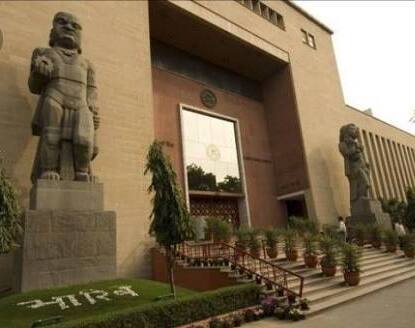
Yaksha & Yakshi, Doorkeepers at the Reserve Bank of India, by Ramkinker Baij
“Binodini”, was a student at Kala Bhavan and the youngest daughter of Maharaja Sir Churachand Singh and Maharani Dhanamanjuri Devi of Manipur.
Maharaj Kumari Binodini Devi, a Padmashree Awardee, was a personality in her own right. She was an artist, an author, and took Manipuri culture to the world. She was the first woman to graduate from Manipur [2]. Manipur has had an interesting connection to Bengal. Apparently, at one point in history, Chaitanya Mahaprabhu's followers impressed upon the Manipur king to use the Bengali script. So for a long period of time, the language was Manipuri, but the script was Bengali - a traveler conversant with the Bengali language could visit Manipur, would see everything in Bengali text, but understand nothing! It was in the 70's that Meitei was brought back in place of Bengali. The 70s and 80s saw this transition.
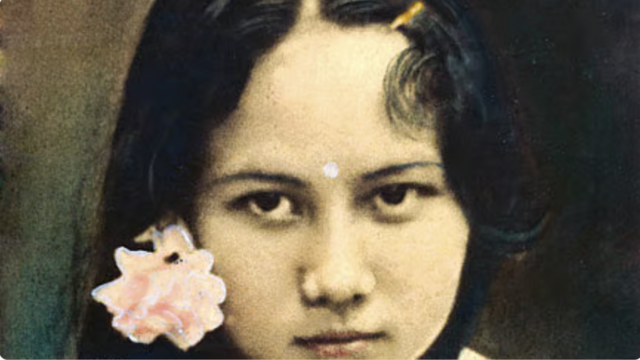
Binodini Devi, Image Credit: Open Magazine
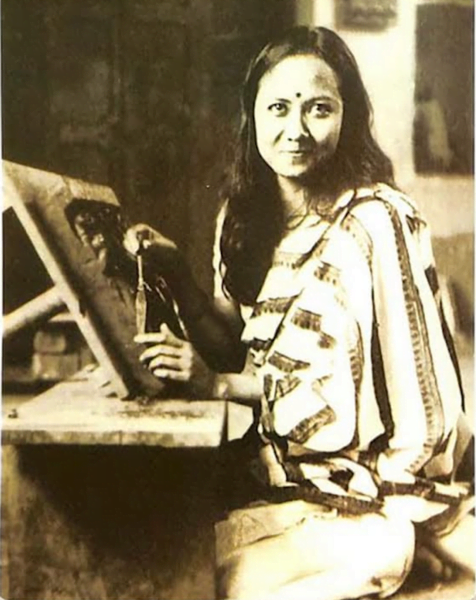
Image Credit: Public Domain
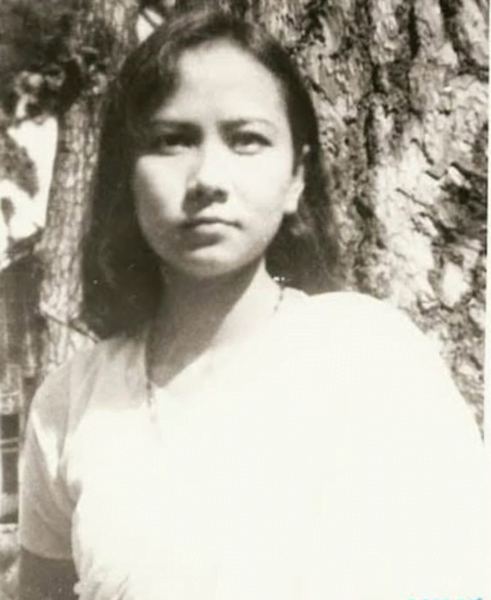
Image Credit: Public Domain
Google Arts and Culture has documented at least one such portrait of Binodini. There are others.
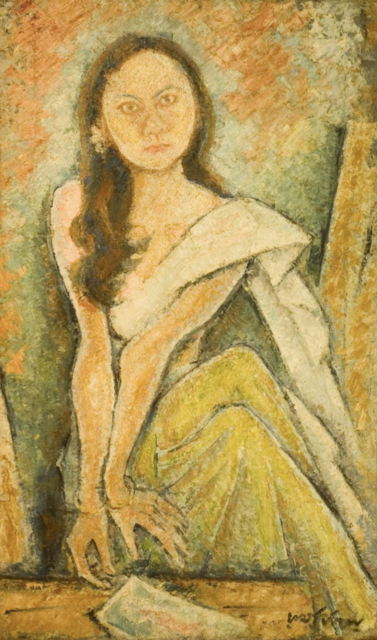
Binodini by Ramkinker Baij
Collection NGMA
The narrative is particularly interesting - the portrait above interestingly captures the “predicament within Binodini”!
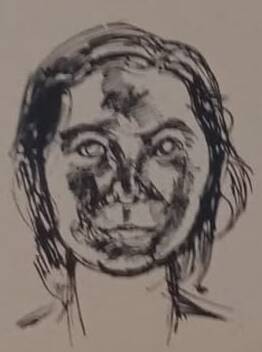
Likely the preparatory sketch for the sculpture by Ramkinker, Source Unknown
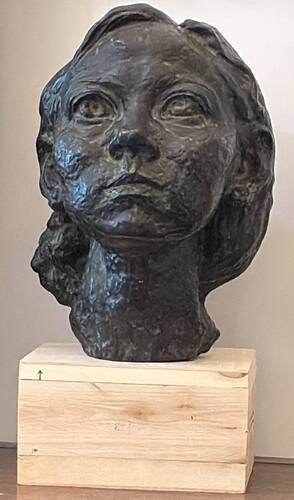
Binodini by Ramkinker Baij, circa 1948
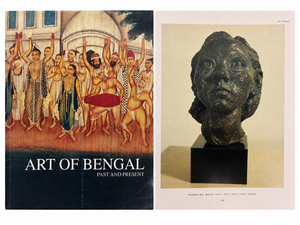
Published and Exhibited 2001 [6]
The original clay model of Binodini created in 1948 is at Nandan, a museum in Santiniketan. Other sculptures by Baij at Nandan include Gandhi Ji, and Tagore.[7]
This is part of a series of what are described as expressionist portraits made during his lifetime, the majority of which are in the NGMA.
.png)
Image Credit [4]
‘Binodini’ - the ‘Renaissance Lady of Manipur’. Likely the finest Baij (and the only portrait) bronze in private hands.
N.B. The green-black patina, the expressionistic ridges. make photography of this work difficult.
Disambiguation: "Noti Binodini" was a famous theatre personality in the late 19th century
References:
1 - Ramkinker, published by BC Sanyal, Secretary, Lalit Kala Academy
2 - The Princess of Arts, Janice Pariat, Open Magazine
3 - IMASI - The Maharaj Kumari Binodini Devi Foundation
4 - Ramkinker - Through the Eyes of Devi Prasad, Naman Ahuja, JNU 2007
5 - The Maharaja's Household: A Daughter's Memories of Her Father by M.K. Binodini (Author), L Somi Roy (Author)
6 - Art of Bengal Past & Present, 1850 - 2000, Published 2001, pg 148, Exhibited NGMA Mumbai January 2001, Exhibited CIMA Calcutta April 2001
This was a major exhibition and book release. The curatorial advisory panel consisted of Jogen Choudhury, Ganesh Pyne, Bikash Bhattacharjee, Nikhil Sarkar, R. Siva Kumar - amazing !
7 - https://www.visvabharati.ac.in/iqac/uploads/naac/315_3_museum.pdf
8 - Bronze casts of Ramkinker's expressionist portraits are exceptionally rare.

