This research note concerns the two gilded bronze sculptures discovered at the Mangaldas Estate, whose provenance suggests they were likely acquired during the estate’s principal period of art collecting in the mid to late nineteenth century.

One has been cleaned - the other retains the original patina. It is unclear if the base belonged to the original sculpture.
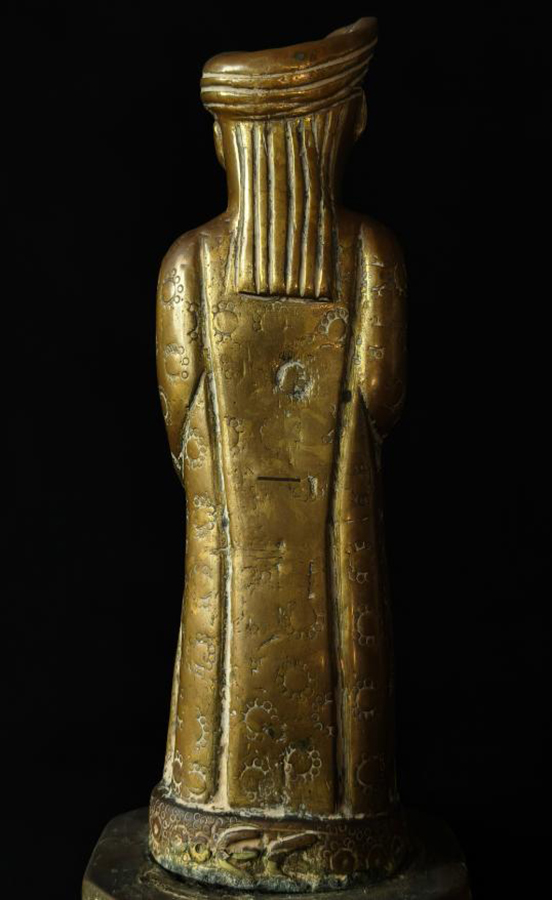
Back - Inscription at Bottom ?
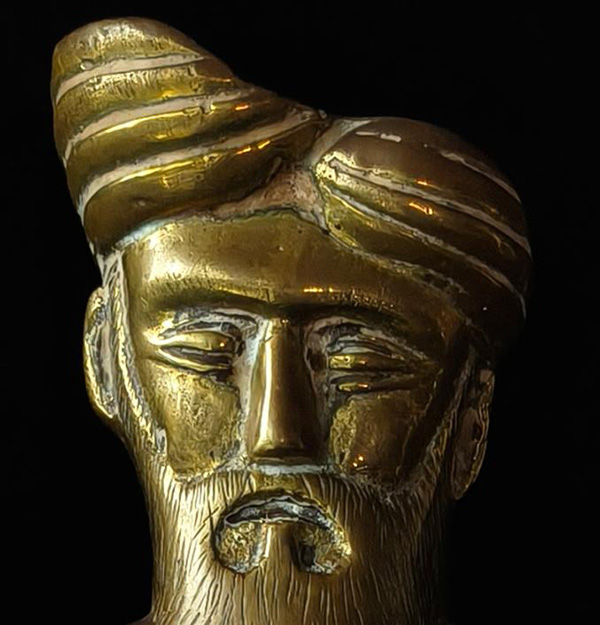
Face

Bottom
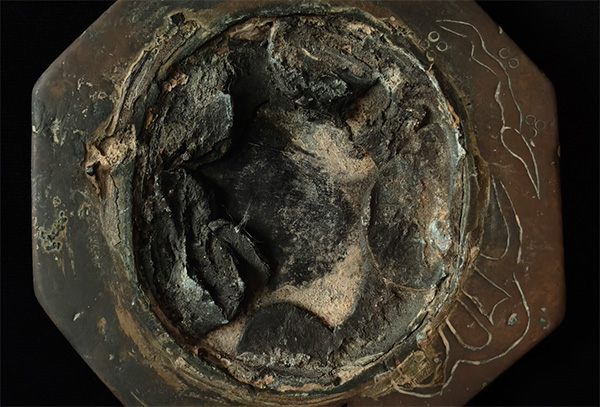
Base
We believe they belong to the Persianate world. “The long, pointed beards are very Qajar, associated in particular with the Persian elite during the reign of Fath Ali Shah (r. 1797-1834), but they continue until ca. 1850” (1)
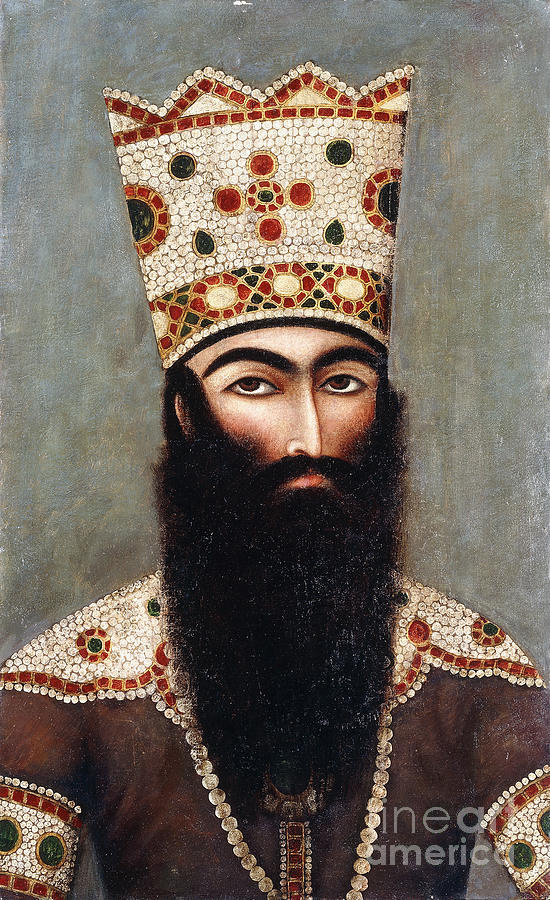 There appears to be an example in literature - from the expeditions of James Wolff to Bokhara. Not entirely sure if this is connected. The story of the expedition is interesting in itself - his was the third expedition - the first two were mercilessly executed by the Emir !
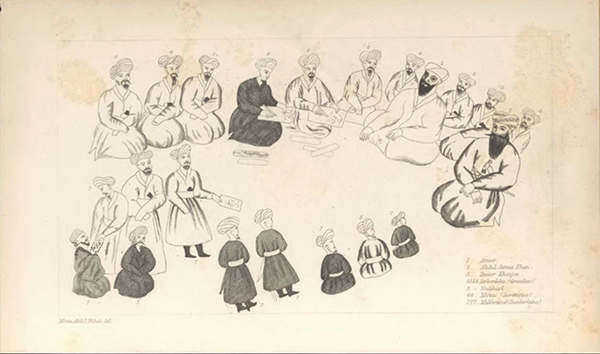
Similar turbans, robes, etc. Note the pistol-grip knife handle, a form recognizable from both Mughal arms and Mughal painting traditions.
Other Persianate sculptures are known.
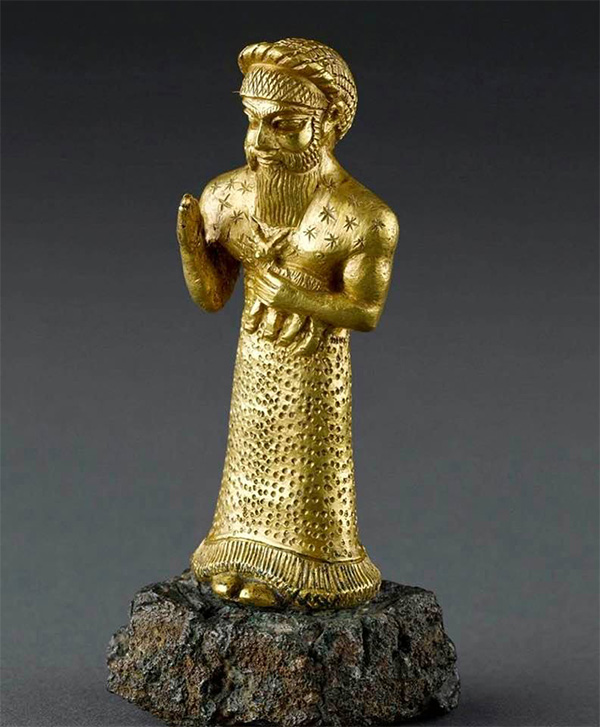
Discovered on February 22, 1904, in the ancient city of Susa, the celebrated Elamite sculpture often described as the “statuette of a bearded man carrying a goat” remains one of the most evocative surviving objects from the ancient Near East. The work was unearthed during the French archaeological mission to Persia led by Jacques de Morgan, with excavations at the site overseen by archaeologist Roland de Mecquenem. Found near the ancient Temple of Inshushinak on the Acropolis of Susa, the discovery formed part of a sacred deposit later known as the “Trouvaille de la statuette d’or” (“Find of the Golden Statuette”). Remarkably, the cache contained not one but two nearly identical figures depicting a bearded man carrying a young goat as a religious offering — one crafted in solid gold and the other in silver. Dating to the Middle Elamite period, approximately 1500–1100 BC, these extraordinary objects provide a rare glimpse into the devotional practices and artistic refinement of ancient Elamite civilization. Today, both statuettes are preserved in the Department of Near Eastern Antiquities at the Louvre Museum, where they continue to fascinate scholars and visitors alike.
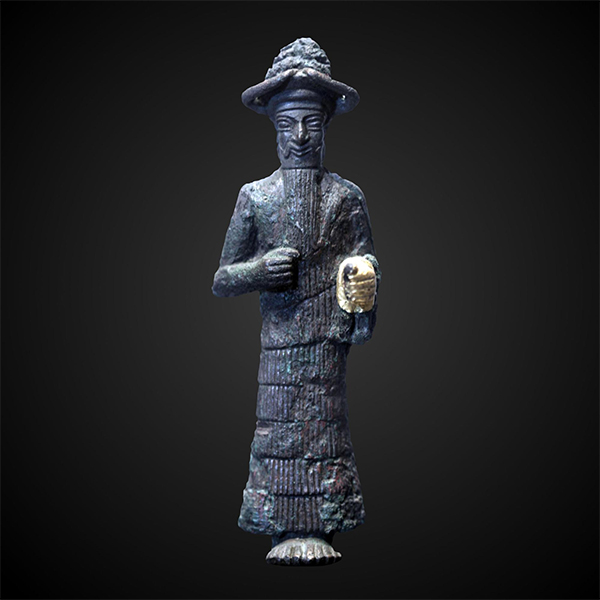
The "God with a Golden Hand," widely believed to represent the Elamite deity Inshushinak, was discovered during the French archaeological excavations of Susa, Iran, which occurred between the late 19th and early 20th centuries. This bronze figurine dates back to the Middle Elamite period, approximately 1800–1700 BC, and is currently housed in the Louvre Museum in Paris. It depicts a divine figure wearing a traditional horned tiara and a long, tiered robe, with one hand covered in gold leaf to symbolize its high status and sacred power. (2)
References
1 - Email exchange with Barry Flood
2 - Facebook @ History Three Thousand
3 - Mangaldas Estate @ Prinseps

