Among the handwritten treasures once preserved in the estate of Rathindranath Tagore, is a fascinating, dramatic manuscript dated simply “22nd Poush, 1322” (7th January 1916). Written on both sides of the pages, the manuscript appears to have been intended for stage performance. One of the plays of this manuscript, Phalguni has a strong resemblance to Rabindranath Tagore's celebrated dance-drama of the same name, suggesting that these manuscripts may represent adaptations of the original text. Its dramatic structure, language, and humor speak vividly of the cultural milieu from which it emerged.
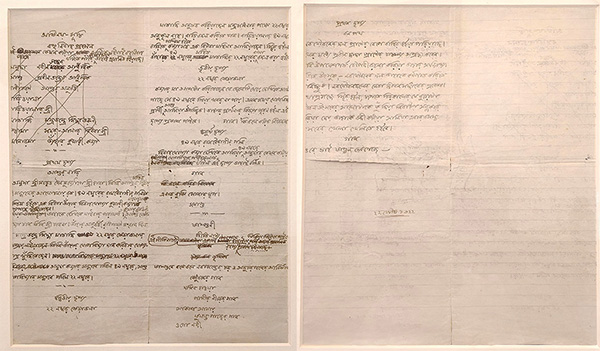 Handwritten Theatrical Manuscript from the Rathindrnath Tagore Estate
The first drama, Bahu Bibaha Prahasan, unfolds as a witty social satire built upon situational irony, where exchanged residences, mistaken identities and unexpected encounters create humor while subtly criticizing social customs associated with marriage and spiritual practices. Through characters like Annada and Ashu, this drama humorously exposes the absurdities of marriage customs and blind fascination with ‘Yog-vidya'.
In contrast, the dance-drama Phalguni celebrates Spring, youth and the eternal cycle of losing and rediscovering life itself. Through songs, this dance-drama captures the joy and restlessness of life during the month of Phalgun.
These dramas create an atmosphere that feels deeply connected to the Bengali stage tradition of the early twentieth century, preserving not just stories, but the pulse of a nearly forgotten performance culture. An exceptionally rare manuscript with corrections in the poet's own hand.

