In the early 1920s, at Sriniketan, he established a rural reconstruction centre where agriculture and village industries were developed as regular institutional activity. Craft entered this programme as part of daily labour. Weaving, carpentry, pottery, dyeing, and leatherwork were taught alongside cultivation and rural service, and workshops became working spaces where students and village artisans learned trades. Speaking about the purpose of this effort, Rabindranath expressed the principle that guided the work: "The drama of national self-expression could not be real if rural India were banished."
Within this programme, leatherwork was developed through the initiative of Rathindranath Tagore. In 1928, during his stay in England, he began to study leatherwork and developed a sustained interest in the craft. After returning to Santiniketan later that year, he introduced leatherwork to students and continued to practise it within the training system at Sriniketan. In 1930, after formal vocational instruction in Europe with Pratima Devi, he established a regular leather workshop at Silpa Sadan.
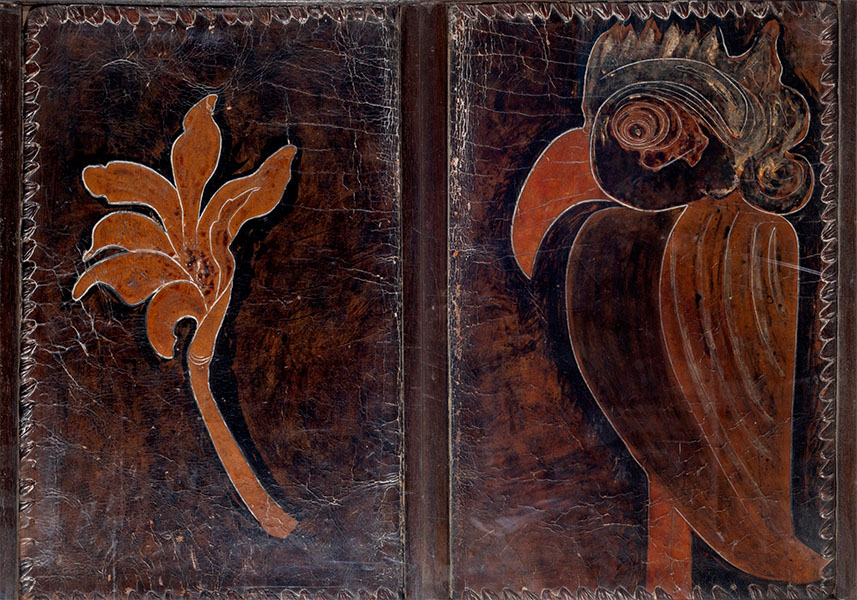
Public Presentation of Santiniketan Leatherwork
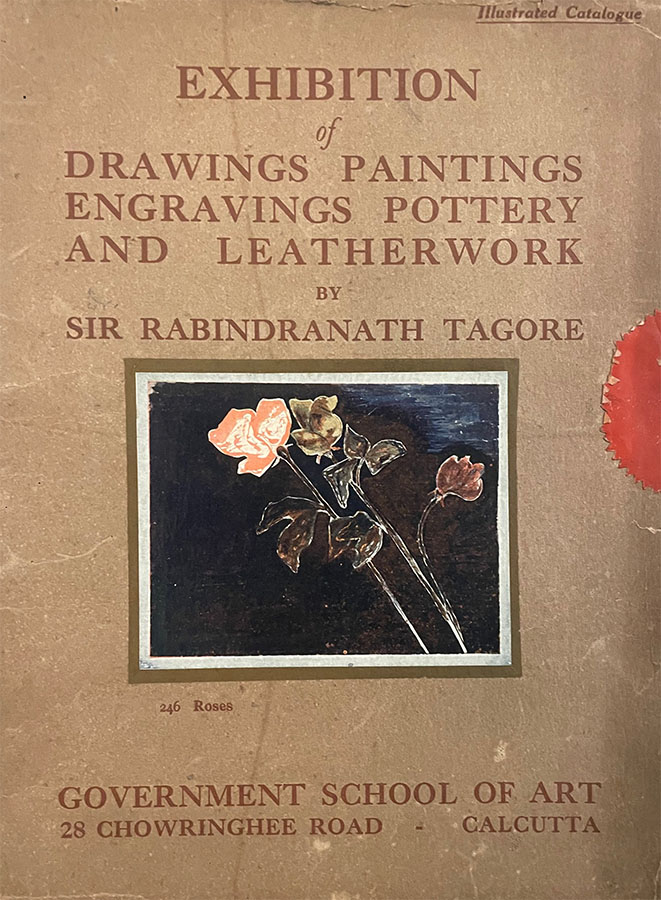
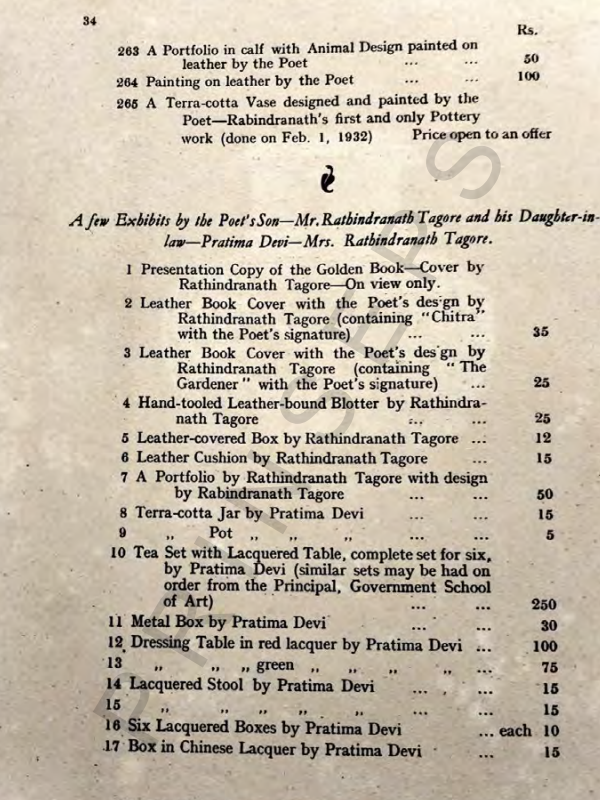
The exhibition also reflects a distinctive relationship between father and son, expressed through the shared language of leatherwork. Designs created by Rabindranath were translated into finished objects through the craftsmanship of Rathindranath, and the resulting works brought together literary imagination, drawing, and material skill within a single object. This collaboration gave the early Santiniketan leather pieces a recognizable character and placed leatherwork within the artistic life of the institution.
The same catalogue lists works by Pratima Devi, situating her practice within the same exhibition context and underscoring the collaborative nature of the Santiniketan craft movement during these formative years.
A Leather Portfolio by Rabindranath Tagore
Among the objects recorded in the exhibition catalogue was a leather portfolio made by Rabindranath. The catalogue describes the work as “a portfolio in calf with animal design painted on leather by the Poet.” Surviving examples of this object are preserved at Rabindra Bhavan, Santiniketan, where it is identified as a leather folio with an embossed figure executed by Rabindranath.
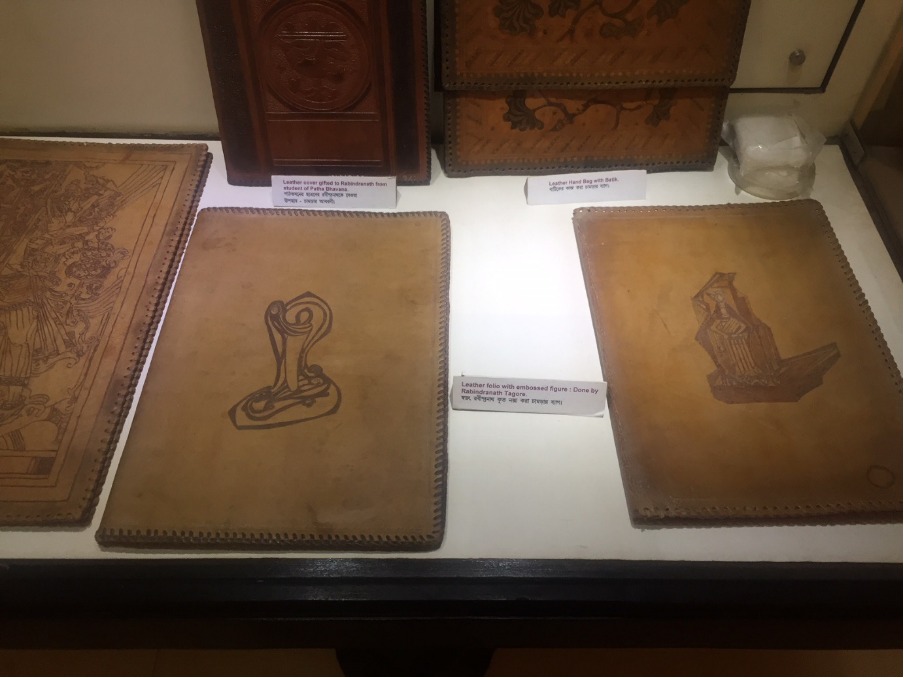
Exhibition Display at Rabindra Bhavan, Santiniketan states “Leather folio with embossed figure, done by Rabindranath Tagore” .
Another example of Ink on Leather exists at the NGMA
At the exhibition alongside Rabindranath's leatherworks to the left, we can see an ink on leather work by Nandalal Bose . This shows the shared artistic milieu of Santiniketan, where painters, designers, and craftsmen worked in close association.
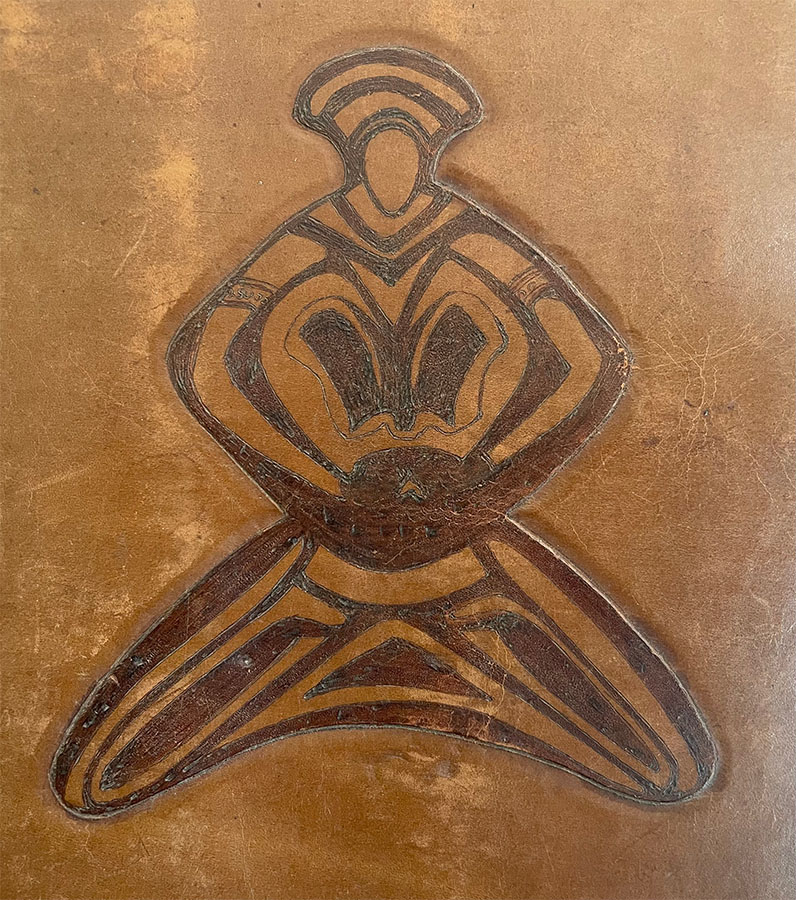
Rabindranath Tagore, Ink on Leather
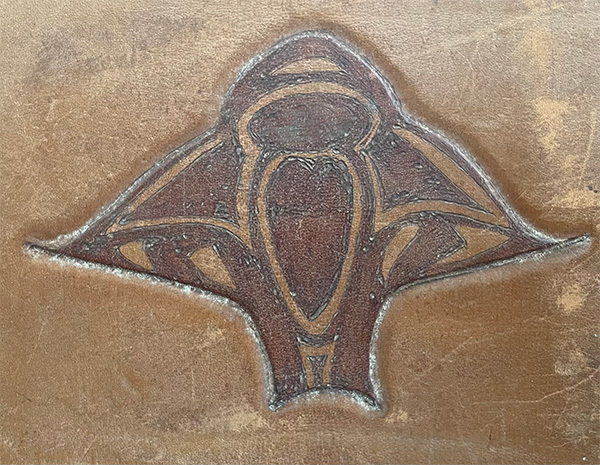
Rabindranath Tagore, Ink on Leather
As leather production became organized at Sriniketan in the early 1930s, the work of the leather workshop developed alongside the artistic life of Kala Bhavana at Santiniketan. Teachers and students contributed designs, drawings, and decorative ideas that entered the surfaces of functional objects produced in the workshop. Book covers, portfolios, and folios often carried painted or inked designs prepared within this artistic environment, linking the art school to the craft units of the institution.
Within this shared setting, artists such as Nandalal Bose shaped the visual direction of Santiniketan’s artistic work, while students trained in drawing and design participated in the creation of decorative surfaces used on leather objects.
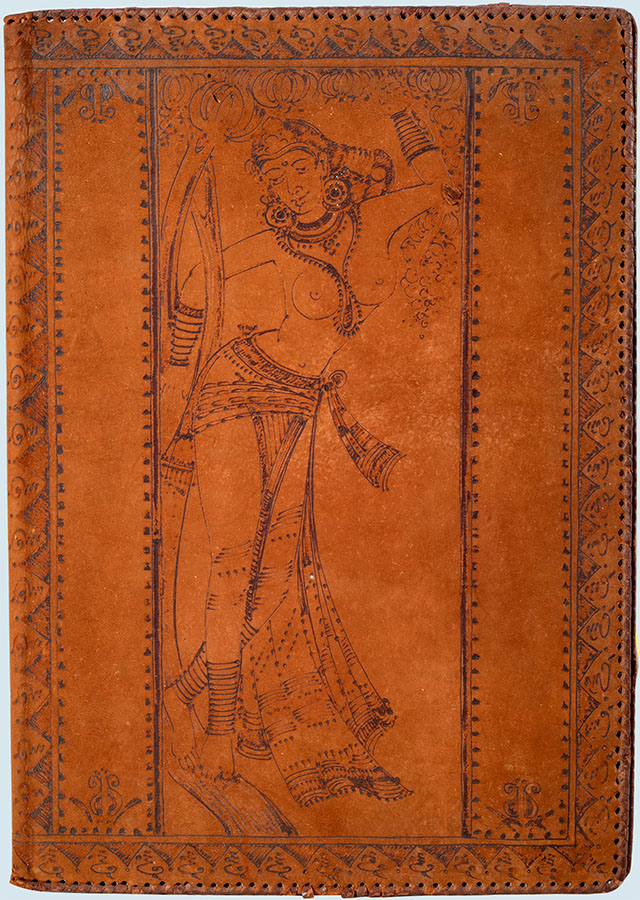
Ink on leather by Rani Chanda, Santiniketan, early twentieth century
Rani Chanda studied at Kala Bhavana at Santiniketan, where she received training in drawing under the guidance of Nandalal Bose and other teachers within the school. Among the surviving objects associated with the Santiniketan leather workshop is a leather folio bearing an ink drawing by her, demonstrating how student artwork could appear on leather surfaces produced within the institutional setting. Her memoirs preserve an important statement by Rabindranath Tagore on the purpose of craft training at Santiniketan:
“Craft should not be only a hobby—take it as a business… so she can become self-reliant."
A Living Craft Tradition
The history of leatherwork at Santiniketan belongs to a larger effort to restore dignity and stability to rural life through skilled work. In the early decades of the twentieth century, Rabindranath Tagore placed craft at the centre of education and village reconstruction, and at Sriniketan, he established institutions where practical trades could be taught and sustained.
Within this programme, leatherwork took shape through the initiative of Rathindranath Tagore, who introduced the craft to students, organized the workshop at Silpa Sadan, and oversaw the production of functional objects that soon entered exhibitions and public life. The objects themselves—book covers, portfolios, bags, and domestic articles—remain the most direct evidence of this work. They carry the marks of careful design, skilled handling of material, and the collaboration of teachers, students, and village artisans working within a shared institutional setting.
The leather folios, exhibition pieces, and surviving workshop products document a craft tradition that developed through steady instruction, experimentation, and organized production. Within the artistic life of Santiniketan, figures such as Pratima Devi, Nandalal Bose, and Rani Chanda contributed to the visual culture that surrounded the leather workshop, ensuring that functional objects carried both artistic discipline and local character. Their work reflects the continuity of training and collaboration that defined the institution.
Today, Santiniketan leather goods continue to be produced in the region, and the craft remains associated with the same principles that guided its early development: skilled labour, practical use, and careful attention to material. The surviving objects, archival records, and exhibition catalogues preserve the history of this tradition and testify to a sustained effort to connect education, craft, and rural livelihood within a single institutional framework.

