1922 seems to be quite the pivotal year in Indian art.
Bengal School
We have Abanindranath Tagore’s Bengal School type of painting at its pinnacle. A superb example of this is the portrait of Dhirendra Deb Burman. The ‘Bengal School’ rules for eyes and lips etc., have been strictly followed. The work is a superb example and is to be admired - each and every hair strand and the mustache individually drawn. Its finely drawn - the web-optimized image does not convey the same.
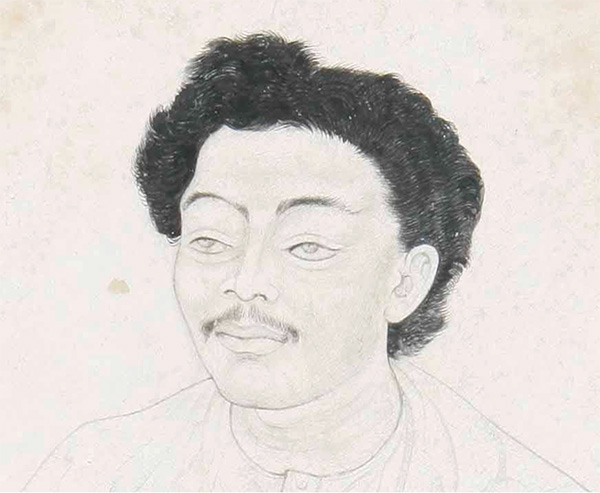
Portrait of Dhiren Deb Burman by Abanindranath Tagore. Christies . Published
Against Bengal School
Atul Bose clearly mentioned in an interview that he did not wish to continue this style and took a stand against it. The impromptu portrait of Sir Ashutosh Mukherjee was a superb example of creating a live portrait while simultaneously identifying the ethos / the personality through it. You can somehow see this, albeit decades later, in Bikash - who managed to include the personality/ a message in his portraits.
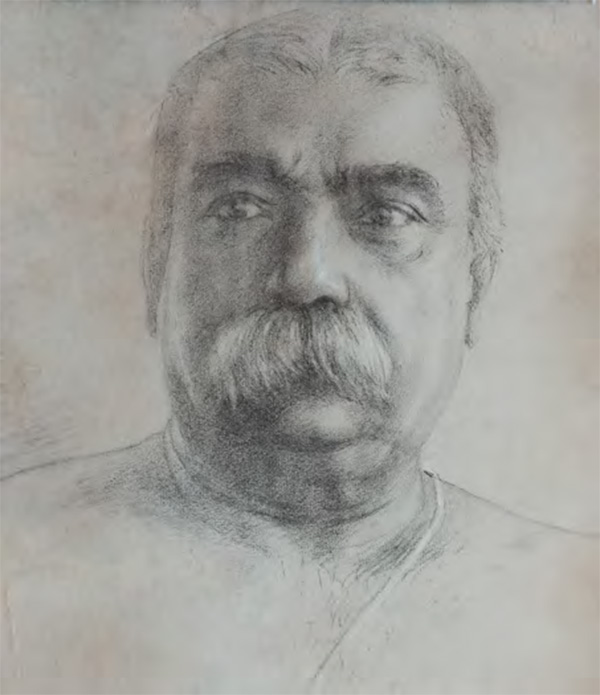 Estate of Atul Bose. A famous portrait.
“Today, the events from fifty years ago are flashing before my eyes. In those days, artists who painted from direct, eyewitness experience had no prestige in the artistic circles of that time. There was appreciation for the artists of the Indian Society of Oriental Art. They belonged to the group that painted indirectly, creating pictures from stories they had read or from imagination and contemplation. Atul Babu could not accept the claims of the latter group. He went straight to Ashutosh Mukhopadhyay. With his approval, Atul Babu painted AshuBabu’s portrait: The Bengal Tiger. The painting created a sensation in the art world. The artist received recognition from the educated community. After that, the University of Calcutta honored him with the Guru Prasanna Ghosh Scholarship. As an artist, Atul Babu was the first to receive this distinction.” (Atul Bose - Anandabazar Patrika, 28 Baisakha, 1379 (11/5/72)
Atul Babu differed with Abanindranath Tagore regarding the method of artistic creation.
Western / Academic Portraiture
Jamini Roy was a very successful portrait painter. In fact, he was commissioned to recreate a portrait of Debendranath Tagore by Abanindranath Tagore as the original portrait (of Debendranath) by Sashi Hesh had degraded. We can identify the last of the portraits as created in 1921 (Portrait of Nandorani of Serampore). Most of these portraits were made from photographs - it is unlikely that there were any live sitters. In a sense, the importance here is Jamini's shift away from academic portraiture to a path that ultimately led to the discovery of his own style. This shift away began around 1922.
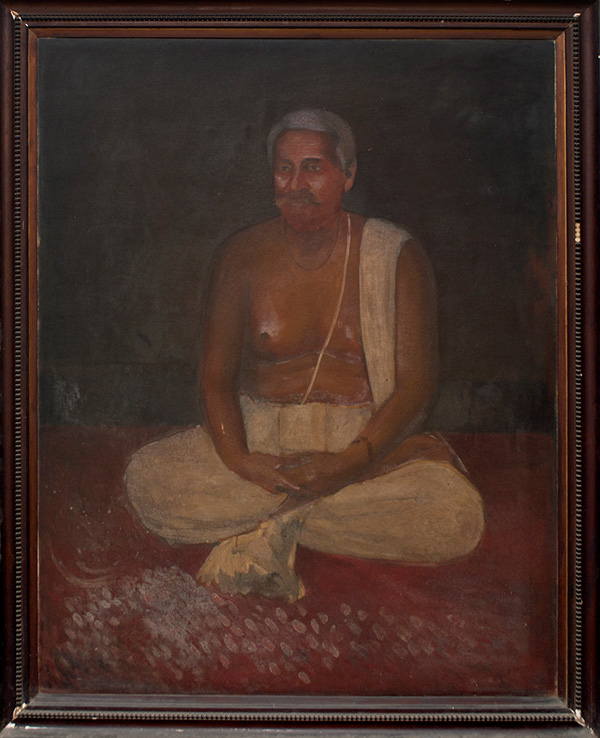
Portrait of Ananda Kumar Chatterjee - Jamini’s landlord at Bagh Bazar. Ref.Documentary on Jamini Roy by Debabrato Roy. Unrestored.
Bauhaus Exhibition
1922 is also the year the Bauhaus's first international exhibition was held in Calcutta. Curated by Stella Kramrisch and held at the Indian Society of Oriental Art. The exhibition included artists such as Paul Klee, Wassily Kandinsky, and Lyonel Feininger, as well as Indian avant-garde artists such as Abanindranath Tagore, Gaganendranath Tagore, Nandalal Bose, and Jamini Roy. The Indian Society of Oriental Art was founded by Abanindranath Tagore. It was a center for many collaborations (especially across Asia) and needs further exploration and study.
Have we fully understood the effect/influence of the Bauhaus exhibition held in 1922 on art in India. We see certain hints but are not sure if they are related.
A letter from Nandalal Bose to the librarian in Santiniketan carries a print - a linocut possibly by his student showing the lion sculpture (guardian of the gate of the Odisha temples and architecture) but executed in a very different style.
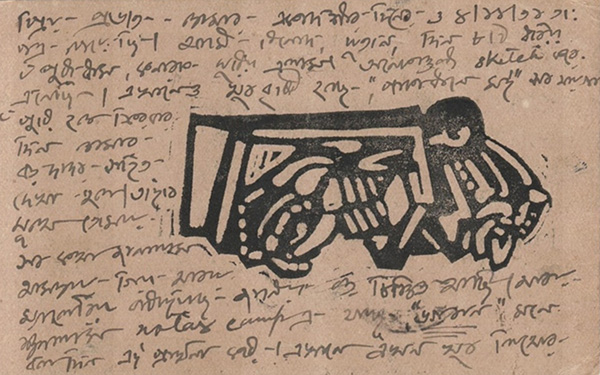
Image Credits: Vishwa Bharati Santiniketan.
Rabindranath Tagore also had these three-dimensional construction figures in the late 20s. What were these influenced by? Unclear !
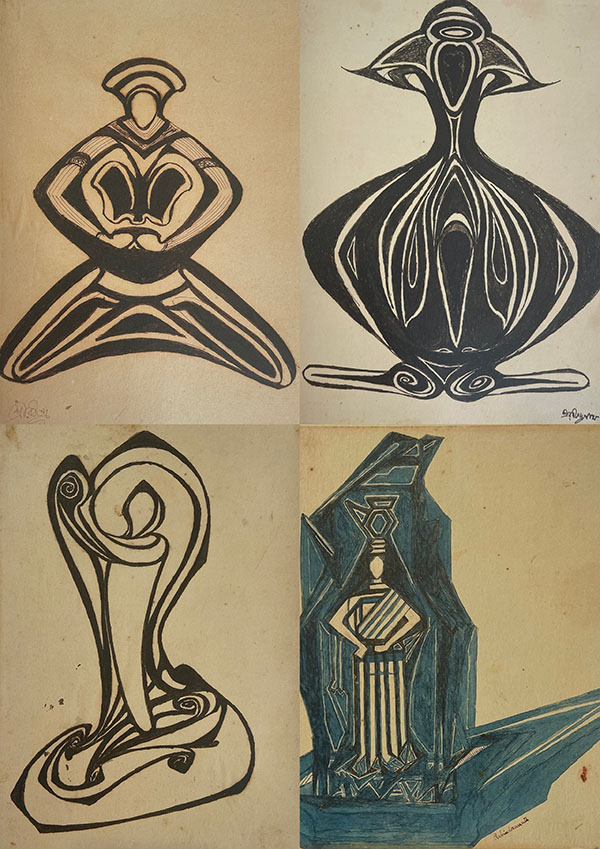
Image Credits: Vishwa Bharati Santiniketan. Ink on paper, c 1928
These are also seen in his leather folios. For further details refer to the book on the estate of Rathindranath Tagore.
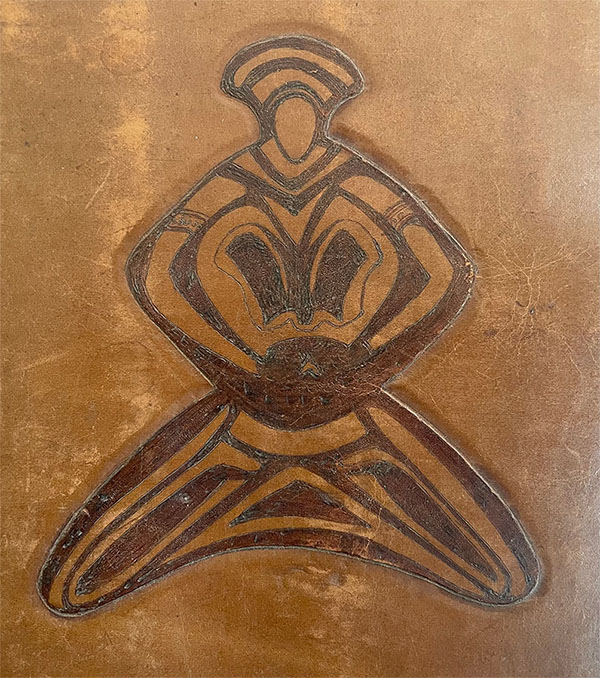
Rabindranath Tagore - Ink on Leather, c 1928
And certainly the “cubist” artworks by Gaganendranath Tagore are well documented.
Interestingly, Paul Klee was exhibited at the 1922 exhibition, but the next time we see works inspired by him is three decades later, by Gaitonde in 1952 (another pivotal year)
References
How Bauhaus Found Its Way in India https://artsandculture.google.com/story/how-bauhaus-found-its-way-to-india-mode/bQVxThtANNUNJA?hl=en
Discussion with Romain Maitra
The Estate of Rathindranath Tagore (book)

